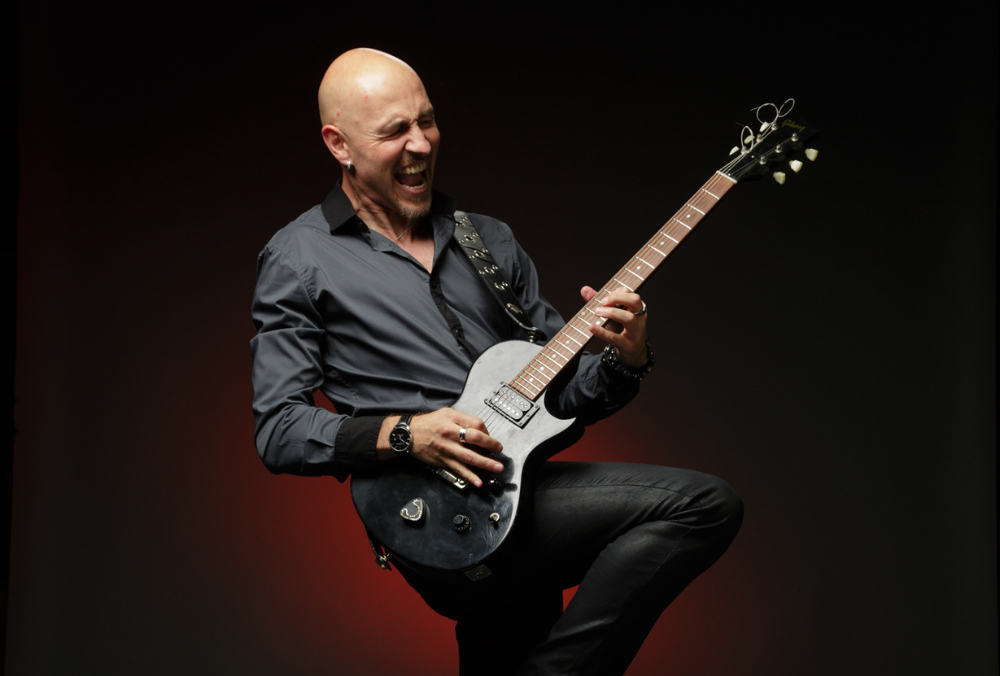
HRISTELIN writes like a guitarist who trusts silence as much as sound. His sessions begin with a simple motif on a clean electric line, then he adds space, texture, and just enough tension for the melody to decide where it wants to go. The result is music that feels precise rather than ornamental, even when the arrangement grows large.
Dubai is present in these tracks without leaning on clichés. The city’s pace shows up as crisp percussion and wide synth pads that leave room for air. You hear it in “Dubai Star” with Julia Kirilova on vocals, where the hook arrives quietly, then tightens its grip as the guitar answers in short phrases. Nothing shouts. The parts lock in and move.
HRISTELIN’s playing favors contour over flash. Solos are built from singable lines that still satisfy the theory nerds. He will slip in an odd meter or a Balkan turn, but never as a stunt. The moves serve the arc of the track. “One Life” uses this approach well, pushing forward with a steady pulse while the guitar sketches a melody that you can hum after one listen. “After Life” sits on the other side of the spectrum, patient and atmospheric, like a long exposure photograph where detail slowly appears.
Production choices stay transparent. Delays are set for depth, and reverb opens a room rather than hiding in it. When the mix expands, you can still trace each instrument with your ear. “Martian Code” shows that discipline, stacking rhythmic figures that feel complex yet readable.
Across these releases HRISTELIN avoids hollow fireworks. He relies on form, tone, and phrasing to carry emotion. That restraint is the point. The songs are inviting enough for casual listeners and sturdy enough for close study. You can step in for the chorus and leave satisfied, or put on headphones and follow the small decisions that make the whole thing work.

Recent Posts

Interpol and Queens of the Stone Age Announce Massive Mexico City Show

GTA VI Soundtrack Revealed: New Music from Yung Lean, PinkPantheress, and More

Alif Hilal (fka Lyra Pramuk) Delivers a Steamy, Genre-Defying FADER Mix

Johnny Marr and Noel Gallagher Reflect on Iconic Guitars

Hayley Williams Supports Displaced Ed Sheeran Tour Acts