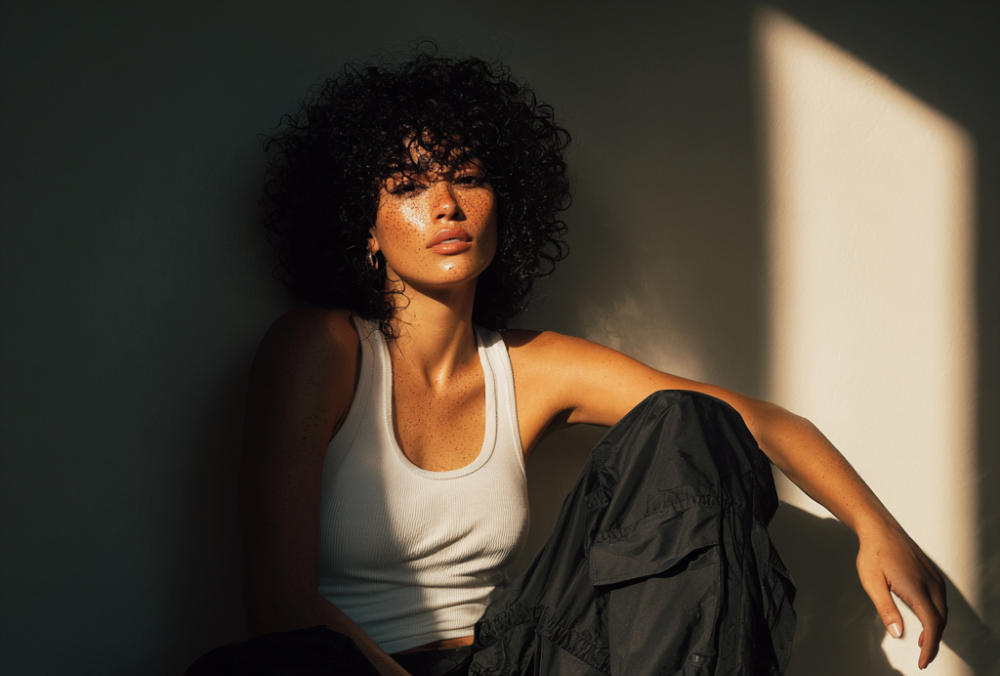
Layla Rey doesn’t pick a lane; she builds her own road between them. The artist carries the rawness of the underground into spaces that are cinematic, polished, and emotionally precise. Her music toggles between house floor energy and R&B vulnerability without losing either. What holds it together is a creative instinct that asks one question before anything else: does this need to move, or does it need to sit? That question shapes her sound, her visuals, and — as this interview makes clear — the way she thinks about everything.
You’ve talked about carrying both the streets and the spotlight. What does it actually look like when those two worlds pull you in different directions creatively?
It looks like me saying something a little too real, then sitting back like, okay, how do I make this sound expensive?
The instinct is always honest. The spotlight just teaches you how to deliver it so it lingers a little longer.
“Still I Rise” goes full underground house. “You Changed the Way I Love” is slow-burn R&B. What tells you which sonic world a story belongs in?
I ask myself one question—do I need to move through this, or sit with it?
If I need to move, it’s house. If I need to overthink it just a little—R&B every time.
There’s a difference between being hurt and being altered. “You Changed the Way I Love” sits in the second space. Do you think that kind of change is permanent?
It’s permanent the way taste is permanent.
Like once you’ve had something a certain way, you don’t forget it—you just become more selective after. Which isn’t a bad thing… depending on who you ask.
The music video for “If I…” places longing in quiet, everyday moments. What was the creative decision behind framing that desire inside the mundane rather than something more visually dramatic?
Because longing isn’t dramatic most of the time—it’s inconvenient. It’s you smiling at the wrong text, or dancing with the wrong person. That kind of quiet tension? Way more interesting to me.
Your visuals pull from Hype Williams‘ cinematic playbook but stay grounded in real narrative. How do you balance spectacle with authenticity when you’re building a music video concept?
I let the story lead, then I let it dress up a little. You can have all the colors in the world, but if there’s nothing underneath it, it’s just decoration. I like my visuals to feel like they mean something, even when they’re being a little extra.
“If I…” lives in hope. “You Changed the Way I Love” lives in the aftermath. Is this the same relationship across two songs?
Same mindset, different timing. One is me believing what I want to believe. The other is me realizing I probably shouldn’t have.
“Miss You Bad” features a rapper on an R&B track — something that can either elevate a song or split it in half. How did you and Brownchild make sure his verse deepened the record instead of redirecting it?
I told him, “Don’t interrupt the feeling—join it.” And he understood that. His verse feels like the other side of a thought, not a whole new conversation.
You’ve shown you can carry a song alone. Now you’ve shown you can share space without losing presence. What does this collaboration reveal about your artistic direction going forward?
That I’m comfortable.
Once you’re comfortable, you stop needing to prove you’re the main character—you just are.
Vulnerability runs through your music, but it shows up differently depending on the track — sometimes exposed, sometimes guarded. Which version is harder to write?
Guarded, for sure.
Being open is just… telling the truth. Being guarded is like telling the truth in a way that only certain people will catch. It’s a little more… curated. And a little more fun, honestly.
Recent Posts
Recent Posts

AlphaTheta’s Studio Plan Lets DJs Edit and Remix Their Libraries

Julia Cumming Joins Wolf Alice for Olivia Rodrigo’s ‘Unraveled’ Tour

Sasha Keable Delivers Soulful Performance on Saturday Night Live UK

pinponpanpon Unveil Manga Alongside Debut Album ‘pinponism’

Behind the Scenes: Gunna and Coco Gauff’s “Pop It” Music Video