
Search results for Julian Cross

post image

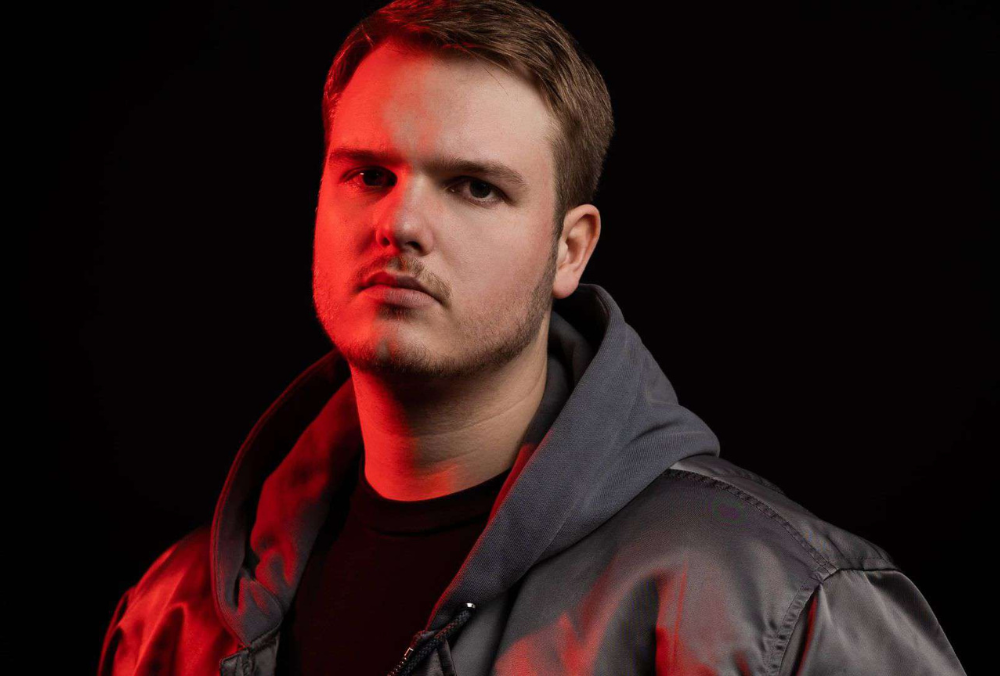
Julian Cross Delivers New Single “Hot N Cold” Featuring Cesqeaux and Notelle

Drum & Bass, a genre known for its rapid breakbeats and heavy basslines, continues to evolve with artists who push its boundaries. Julian Cross, a rising name in the electronic music scene, is one such artist making waves with his innovative approach. Known for blending powerful rhythms with emotive soundscapes, Julian Cross’s latest track, “Hot N Cold,” showcases his ability to infuse Drum & Bass with fresh energy, setting the stage for what’s next in the genre.

Julian Cross, the Amsterdam-based DJ and producer known for his electrifying sound, is back with a new single that promises to heat up dance floors worldwide. “Hot N Cold,” featuring genre-blending beats from Cesqeaux and the soulful, captivating vocals of Notelle, is the latest offering from an artist who has quickly established himself as a dynamic force in the electronic music world. With its pulsating basslines, high-energy production, and emotive lyricism, “Hot N Cold” is set to be a standout in the Drum & Bass scene.

Julian Cross‘s collaboration with Cesqeaux and Notelle is a fusion of styles that elevates the track beyond standard dance music fare. Known for pushing boundaries, Cesqeaux brings his signature blend of diverse genres, adding a unique twist to the track’s hard-hitting beats. Notelle’s powerful voice and evocative lyrics inject an emotional undercurrent, making “Hot N Cold” more than just a club anthem—it’s a track that resonates on multiple levels. Julian Cross expertly weaves these elements into a cohesive soundscape that showcases his ability to craft tracks that are both innovative and accessible.

Julian Cross’s journey from local DJ to main stage sensation has been nothing short of meteoric. Since signing with Afrojack’s WALL Recordings in 2021, Julian has continued to push his artistry to new heights. His debut album, The Stories of the Nebula, solidified his reputation, amassing millions of streams and gaining support from top DJs and radio stations across Europe. With hits like “Antidote,” “All I Need” featuring Afrojack, and “Lose It All,” Julian Cross has shown his versatility in blending emotive soundscapes with hard-hitting electronic beats, a formula that has quickly endeared him to fans and critics alike.

Live performances have also been a crucial part of Julian Cross’s rise. From his early sets in local bars to commanding the stage at global festivals like Tomorrowland, Ultra Music Festival, and Club Eleven in Miami, his shows are known for their infectious energy and technical prowess. Julian Cross’s ability to connect with audiences, combined with his innovative approach to production, has cemented his place as a rising star in the international electronic music scene.

With the release of “Hot N Cold,” Julian Cross continues to build on his impressive trajectory. Supported by the likes of Afrojack and with growing acclaim from both fans and industry peers, Julian’s distinct sound and relentless creativity keep him at the forefront of electronic music. “Hot N Cold” is not just a testament to his evolution as an artist but also a bold statement of where he’s headed next—a future filled with genre-defying tracks that keep listeners coming back for more. As Julian Cross pushes the boundaries of electronic music, his latest single reaffirms his place among the genre’s most exciting talents.

post image

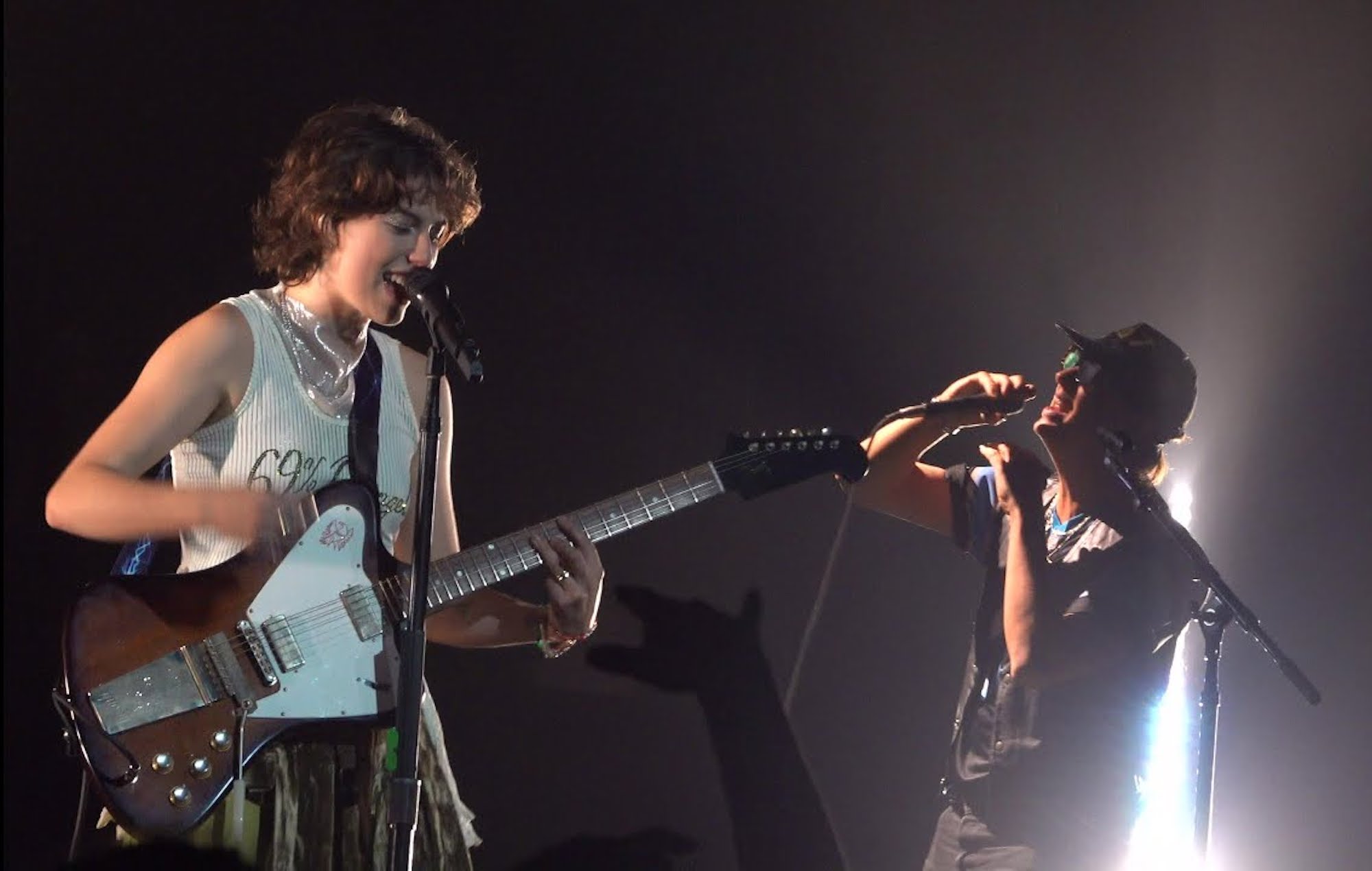
King Princess covers The Strokes’ ‘You Only Live Once’ with Julian Casablancas

King Princess brought out Julian Casablancas to cover a Strokes classic at her New York gig this week – see footage below.

  • READ MORE: King Princess – ‘Hold On Baby’ review: introspective slow-burners that could go further

Mikaela Straus headlined the legendary Radio City Music Hall in her hometown on Monday (October 3) in support of new album ‘Hold On Baby’, and welcomed a special guest to the stage.

“We’re in New York, huh? We’re in my hometown,” King Princess told the crowd during the show. “So maybe it’s only fitting that we play a song by the Strokes.

Advertisement

“I mean, I don’t know. I don’t know,” she added. “I don’t know who’s gonna come out here, but… Julian called in sick!”

Casablancas proved not sick at all, joining Straus on stage to play the 2006 hit – check out the performance below.

King Princess’ 2022 headline tour continues tonight (October 5) in Boston at the Roadrunner venue, running through until November 5 in Austin, Texas.

The dates were rescheduled from earlier this year due to the death of the singer’s grandmother. She explained in a statement at the time: “Recently, I got word that my grandmother was going to be receiving in-home hospice care as she approached the end of her life.

“The amount of love I have for this woman, there was no decision to be made – I had to go to upstate NY and be with her during her final time on this earth. That decision, coupled with other unforeseen challenges across the touring landscape, has ultimately forced me to move Leg 1 of the Hold On Baby Tour. I am so sorry for any inconvenience this has caused for anyone.”

Advertisement

See the remaining dates below and buy tickets here.

OCTOBER 2022
5 – Boston, Roadrunner
6 – Portland, State Theatre
8 – Toronto, History
9 – Detroit, The Fillmore
11 – Pittsburgh, Stage AE
12 – Cleveland, Agora Theatre
14 – Madison, The Sylvee
15 – St. Paul, Palace Theatre
17 – Denver, Mission Ballroom
18 – Salt Lake City, Union Event Centre
20 – Seattle, Showbox SoDo
21 – Vancouver, Commodore Ballroom
22 – Portland, Roseland Theatre
24 – San Francisco, The Warfield
26 – Los Angeles, The Theatre At Ace Hotel
27 – Los Angeles, The Theatre At Ace Hotel
30 – San Diego, SOMA
31 – Phoenix, Van Buren

NOVEMBER 2022
2 – Dallas, House Of Blues
3 – Houston, House Of Blues
5 – Austin, Emo’s

Elsewhere, King Princess recently spoke about the “transformative experience” of working with the late Taylor Hawkins on her new track ‘Let Us Die’.

Discussing how she got in contact with the Foo Fighters drummer via producer and collaborator Mark Ronson, Straus said: “I was like, ‘Do you think that you could get Taylor Hawkins to play on my song?’ He’s like, ‘Mikaela, don’t even worry about it’.” Hawkins accepted the offer to collaborate, hailing ‘Let Us Die’ as “a great song”.

King Princess went on: “So he was recording it at their studio and I was in Brooklyn and we were feeding it through the console. So pretty trippy too to be in my childhood home studio, listening to this guy play on my dad’s speakers. And my dad [was] sitting there watching. I can’t even describe it. I was so emotional. It was crazy.

“He took as long as he needed and he did it, and he was so kind and so gracious,” she added. “He was like, ‘I’m just so thankful. I just love this song and I just love playing’. He was just saying he loves playing drums. And to hear that from somebody who’s lived such a life that, at his age and playing for as long as he has in so many different bands and his own projects, for him to just love to play the fucking drums, that to me is just what we should all strive to be. Somebody who does not lose that love of their instrument.”

post image

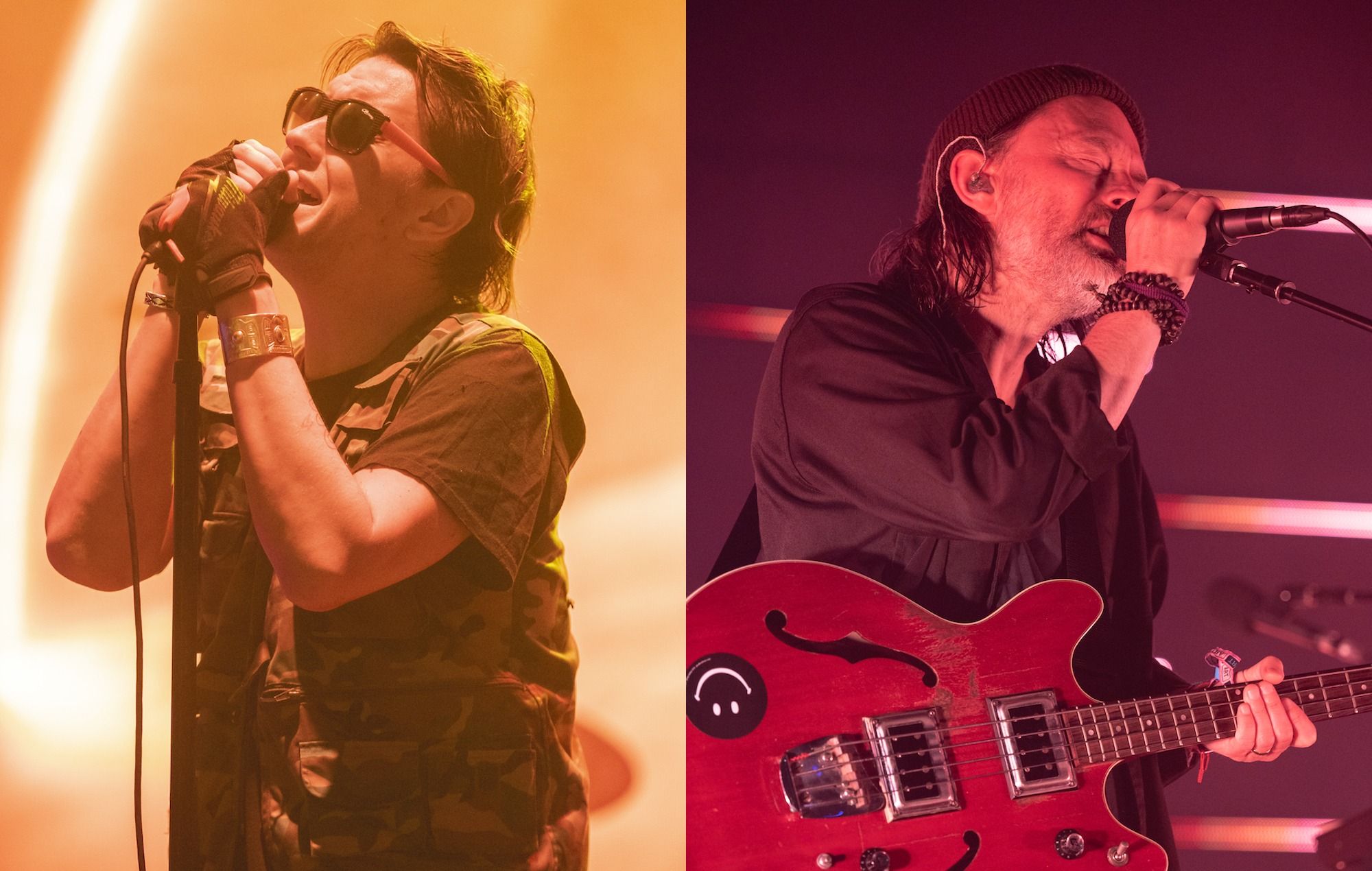
Julian Casablancas calls The Smile’s Primavera set the “best show I’ve seen in years”

Julian Casablancas has called The Smile’s set at this year’s Primavera Sound the “best show I’ve seen in years”.

Radiohead and The Strokes were both performing last night (June 10) as part of the Barcelona festival’s second weekend.

  • READ MORE: The Smile live in London: Radiohead side project prove they’re human after all

Casablancas shared a short video of The Smile – comprised of Radiohead’s Thom Yorke and Jonny Greenwood, and Sons Of Kemet’s Tom Skinner – playing on his Instagram page. “Had my fucking mind blown yesterday, best show i’ve seen in YEARS ……The Smile (Thom Yorke / Johnny Greenwood) – shiiiiiiit that was good,” he captioned the post.

Advertisement

“Like modern phillip glass with best of Radiohead or something… idk,” he continued. “An insane festival overall honestly …Tyler / Tame Impala etc. so many more other champions too … thank you thank you & thank you to all of it and all who came to the show.”

View this post on Instagram

A post shared by Julian Casablancas (@minorbutmajor)

The Strokes headlined Primavera Sound last night, performing tracks from across their back catalogue including ‘The New Abnormal’ singles ‘Bad Decisions’, ‘Brooklyn Bridge To Chorus’ and ‘The Adults Are Talking’. The band were also due to headline the first weekend of Primavera, but had to pull out due to a case of COVID-19 in their touring party.

The Smile’s set, meanwhile, was largely made up of tracks from their debut album, ‘A Light For Attracting Attention’, as well as Yorke’s ‘Pulled Apart By Horses’ record and a trio of new songs. The fresh tracks have been premiered across the band’s recent European dates, including ‘Bodies Laughing’ in Berlin and ‘Friend Of A Friend’ in Zagreb.

In a four-star review, NME said of ‘A Light For Attracting Attention’: “In cutting some new shapes, this supergroup have been set loose to make some of the most arresting and satisfying music of their careers. Christ, it sounds like they’re having fun – or, at least, as much fun as can be had in trading in this kind of jazzed-up misery. Still, after just a few listens that seemingly ironic band name makes a lot more sense.”

post image

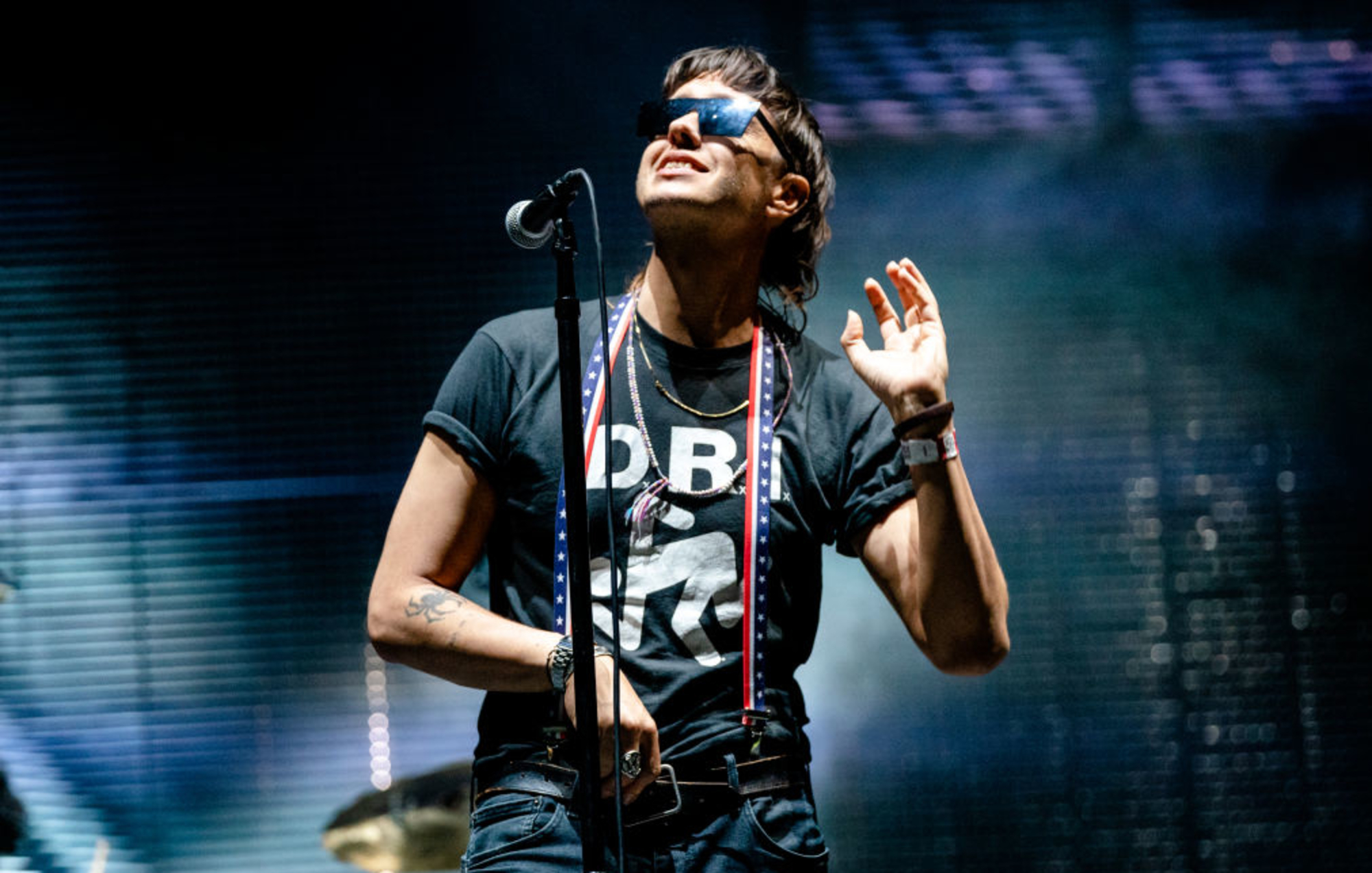
The Strokes’ Julian Casablancas is curating a new ‘Grand Theft Auto’ radio station

Julian Casablancas is set to curate a radio station for the forthcoming Grand Theft Auto Online game, The Cayo Perico Heist.

The Strokes frontman will feature as part of an update due to drop on December 15, which will bring the game’s classic car-jacking mischief to a lavish island.

  • The NME Big Read: The Strokes: “Journalists kiss your ass to your face and talk shit when they’re writing the article”

The station – K.U.L.T. 99.1 Vespucci Beach, Low Power Beach Radio – will also feature appearances by Mac DeMarco and comedian David Cross, as well as music from Joy Division, The Velvet Underground, Danzig, and an exclusive premiere of a new Voidz song ‘Alien Crime Lord’.

Advertisement

The update will also feature another new station from the UK producer Joy Orbison dubbed Still Slipping Los Santos, which promises a mix of house, techno, drill, and drum-and-bass and a new feature to the game called The Music Locker, an underground club that features DJ sets from Moodymann, Keinemusik, and Palms Trax.

The heist itself takes place on a private island, and tasks players with infiltrating what Rockstar calls “one of the most secure private islands in the entire world”. It features heavily armed security guards, and players will have the option to either “neutralise” these forces or evade them with stealth.

A host of artists have featured on radio stations on various versions of GTA in the past including one featuring Frank Ocean, Skepta and Headie One.

Meanwhile, The Strokes recently shared their new video for ‘The Adults Are Talking’, the opening track on their latest album, ‘The New Abnormal’.

Directed by Oscar-nominated filmmaker Roman Coppola, who also helmed visuals for Strokes classics ‘Someday’ and ‘Last Nite’, the video features the New York band donning The Strokes-brand baseball uniforms before facing a robotic pitcher, followed by others taking on robots in tennis and boxing.

Advertisement

Casablancas also recently said he became “sick” of playing old songs live, saying “the music doesn’t move you” when playing the same songs repeatedly.

He added: “When you’re growing up and imagining playing music, it is for the excitement, but the one aspect of doing it for a living that is a sadness you don’t anticipate is that you play songs so much, you become sick of them.

“We hadn’t played for a while,” Casablancas says about returning to live performing earlier this year, “so it was still fun, but when you start playing 30 or 40 shows, the music doesn’t move you. You feel phoney. To some extent, that’s why I play with Voidz. I couldn’t care less about playing ‘Last Nite.’”

He continued: “Really, it’s similar to listening to a song. I get sick of songs quickly. Even Beethoven’s ‘Moonlight Sonata.’ You listen to that enough, you will get sick of it.”

post image

John Lennon’s 30 Best Songs

Yoko Ono: The word ‘imagine’ was a very important word between us. It’s very special because of John’s song “Imagine”, as well. I was there when he wrote it. We were in Ascot, in our bedroom upstairs. Because we were both artists, we showed each other everything. If I scribbled something I’d show it to John. He would scribble something and show it to me. That’s how he wrote his songs, too. He wasn’t one of those writers who’d write from ten until 12 in the morning. He used to think of an idea when we were in a plane or something. He just writes it down. And at the time he writes it down, he’s already got the melody.

John didn’t have a narrow talent. He had all the different emotions he was able to express in his songs. If you want to analyse it, his mum wasn’t around, and his dad wasn’t around, and he wanted someone to listen to him when he was a little boy. When I went to Liverpool, to his childhood home, I cried, because I saw the little bedroom where it all started.

Advertisement

“Imagine” is my favourite of John’s peace songs. I think he thought just like I do now – world peace is an inevitable thing. What are we going to do? Kill ourselves? We’re not that dumb.

I think “All You Need Is Love” was the beginning of John’s peace writing. You notice that even when he was a Beatle, he wanted to dabble in different things, especially anti-war songs. But The Beatles were so successful he felt he couldn’t.

“Give Peace A Chance” is basically John’s idea. I might have thrown some words in. It happened spontaneously in the hotel room [Montreal’s Queen Elizabeth Hotel, during the 1969 Bed-In]. I thought it was great. But, you know, it’s a political song. When John writes something extremely artistic like “Scared” [from Walls & Bridges], that’s a different story. I really admire it, it’s fantastic. But with “Give Peace A Chance”, it’s very important when you try to communicate on a very wide level, you have to choose very simple but powerful words to get the message across.

Advertisement

Thank you Uncut for your continuing support of John’s work and for playing your part in keeping his spirit alive. It is important that new generations continue to discover John’s music and the message behind it. IMAGINE PEACE!

30 BEAUTIFUL BOY (DARLING BOY)

From the John Lennon & Yoko Ono album, Double Fantasy (November 1980)
Written for son Sean, then five, and partially inspired by the writings of French psychologist Émile Coué, “Beautiful Boy” sees Lennon extolling the simple joy of fatherhood.

Liam Gallagher: My song “Little James” was inspired by “Beautiful Boy” and “Hey Jude”. More “Beautiful Boy”. People who’ve got any soul will realise that there’s a day when you go home and put your feet up and cuddle your kids. If anyone slags it off, they’ve either got no heart or they don’t know what the meaning of life is. They just go out and do-do-do-do-do the same thing every day. So fuck them. You can’t win with these people.

Originally, I wanted it to be acoustic. Have you heard Lennon’s demos? They’re dead crackly, and it’s just on a guitar, and that’s the way I’d like to write music. But if it’s gonna go on an Oasis album, it’s gotta be big, hasn’t it? So then I played it to Noel, he went away with the band and he goes: “What do you think of this?” I went: “It’s fucking top.”

29 WHATEVER GETS YOU THRU THE NIGHT
From the John Lennon album, Walls And Bridges (October 1974); released as a single October 1974. Highest UK chart position: 36
Lennon’s first solo US No 1, with Elton John guesting on keyboards. Lennon later joined Elton on stage at Madison Square Gardens in November 1974, for what would be his last public performance.

[embedded content]

Klaus Voormann: I got a call from John asking to come to New York to play on his new record. He was getting some friends together – Jim Keltner on drums, Jesse Ed Davis on guitar – so it sounded like a good idea. I think we did the whole of Walls & Bridges in two weeks.

We didn’t do any rehearsals. John would come in each day with a new song, play it to us and we’d go from there. We never got chord structure or anything like that, but he gave each of us a piece of A4 paper with the words on. We’d make our parts up on the spot and if he liked it, he’d give you a little grin. He’d be wearing his denims, usually with his cap on, very low-key. He was completely on the level – you could tell he just wanted to be a member of a band again.

We’d start in the afternoon and work through the night, although by the end of the fortnight, we’d sometimes start about nine in the evening [laughs]. We would only break for food. John would say: “Let’s have Blintzes!” – he loved to have their pancakes with blueberries and cream – or we’d have Chinese, but then get back to work. This was during his Lost Weekend and it was party time. There was booze, and people heading to the bathroom to sniff stuff. I never saw John drunk in the studio, or stoned, but there was a lot of cocaine around. John would say: “Fancy some nose?” So it was that, and a little hot sake.

I remember the day we did “Whatever Gets You Thru The Night”, John was very excited about it. It’s a happy song, but there’s a sadness to it. You could tell he was missing Yoko, and he was cutting loose. We’ve got an expression for it in German – he was painting over his pain.

The recording is way too fast. Elton John wasn’t there – he came in and did his overdubs later – but Arthur Jenkins [percussionist] and Bobby Keys [saxophonist] were, and as the night wore on, each time it got faster and faster. It ended up almost twice the speed it started out! Bobby was playing all the wrong notes, too, which didn’t help! But John was pleased with it – it was all about capturing the feel and atmosphere in one take. Who cares about the speed and a few bum notes, y’know? John was right, of course – it was his first solo number one in America.

28 THIS BOY
B-side of The Beatles single, “I Want To Hold Your Hand” (November 1963)
Inspired by Lennon’s love of doo-wop and home to the Beatles first great three-part harmony. An instrumental version appeared on the A Hard Day’s Night soundtrack.

Ian Hart, actor Backbeat/The Hours And The Times: This song of longing and lost love breaks my heart when I try to sing it. It’s a perfect short love song, but as always with John’s songs, there’s something more to it; the plaintive quality of Lennon’s voice in the chorus is enough to make you cry. I’ve always loved “This Boy” and have various memories of it. They sang it on Morecambe & Wise, and the Ed Sullivan show in the States, neither of which I probably saw until I started doing research for The Hours And The Times.

But it’s the use of George Martin’s instrumental version in A Hard Day’s Night that provokes the greatest response in me. Ringo, egged on by Paul’s granddad, goes on his lonely journey, feeling like an outcast. It’s only a short scene, but the song perfectly matches the rejection and longing Ringo’s character feels in the movie. I owe my career in a way to John, and a lot more besides. I would never have worked with Ken Loach or Neil Jordan, and I wouldn’t have many of the friends I have. This boy wants you back again: cheesy but true.

27 MOTHER
Taken from the album, John Lennon: Plastic Ono Band (December 1970); released as a single in the US, December 1970.
Inspired by primal-scream therapy, Lennon confronts his abandonment issues head-on, delivering a raw, revelatory glimpse inside his psyche.

[embedded content]

Lee Ranaldo, Sonic Youth: Like Dylan, Lennon’s someone who has done so much that your favourite song could change from day to day, depending on where you’re at. “Mother” came out of this Janov scream therapy, and he was the kind of person who could take things that were going on in his personal life and channel them into his musical life. That was impressive to me. It came out in early Beatles songs – like “You’ve Got To Hide Your Love Away” – he was starting to channel things into his songs, and those early solo records, like the vituperative condemnation of Paul in “How Do You Sleep”, he was channelling this stuff directly into his music in this incredible way.

I always loved “Mother” – it’s really bold and audacious in the way it ends with the screaming lines of lyrics. It’s so emotionally appropriate and so true to who he was and where he was. It never fails to move me.

26 I’M SO TIRED
Taken from The Beatles album, The Beatles (November 1968)
Composed at the Maharishi’s retreat, and recorded during an all night session at Abbey Road, Lennon’s jaded ode speaks volumes for his boredom at being a Beatle.

Jarvis Cocker: John was my favourite Beatle. When I was a kid I thought I’d like to be like him, ’cause he had glasses. I thought that proves that you can be a pop star and wear glasses. “I’m So Tired”, I’ll have that. Lyrically I like the way he calls Sir Walter Raleigh such a stupid get, and the way he manages to get that mundanity into something quite intense. It made me realise that you could actually write songs like that. He’s just listing things that have pissed him off and he can’t sleep and he doesn’t know what to do with himself, ’cause he’s fallen in love. Getting all the little detail into it was an inspiration for me. Also, that’s one of the ones with the easiest chords. When I bought my Beatles Complete Guitar Book I got discouraged ’cause they always seemed to have all these sustained 9ths and I couldn’t play them. Then I realised “I’m So Tired” is quite simple and I managed to master that one.

25 GOD
From the album, John Lennon: Plastic Ono Band (December 1970)
Bitter attack on idolatry, culminating in a denunciation of The Fabs themselves. “And so, dear friends, you just have to carry on…” is all the optimism Lennon can muster, consigning Sixties idealism to the dustbin…

John Leckie, engineer: I can’t say I was in awe of Lennon, because at that time, The Beatles weren’t that hip. I’d done George’s album [All Things Must Pass], which had so many different musicians that it became a challenge, but it was straightforward with John and Yoko. There were only three people in there and very focused. Yoko was there all the time, offering comments and guidance, and [co-producer] Phil Spector.

Spector certainly wasn’t the tyrant in the studio. He was sitting back, letting John and Yoko do their thing. I’m not sure he understood it, though. I remember it being a lot of fun. It was Ringo, John and Klaus [Voorman] – mates. I went back into Abbey Road recently and got the old 8-track tapes out. That was fantastic in itself. You forget how many takes and experimentation went into that album. It was very conscientiously done, almost matter-of-fact. There’s about three days’ worth of recordings of “Mother”. He tried “God” out on electric guitar first, found it wasn’t working and tried it on piano. John would play a song through and through until he came up with the magic take. We’d start recording around six in the evening and often go on until eight in the morning.

24 #9 DREAM
From the John Lennon album, Walls And Bridges (October 1974); released as a single, January 1975. Highest UK chart position: 23
Inspired by Lennon’s fascination with the number 9, this piece of baroque pop featured backing vocals from May Pang (Lennon and Yoko’s PA who became his lover)…

[embedded content]

May Pang: John had just produced Harry Nilsson’s Pussy Cats album, and he’d created a beautiful string arrangement for the opening track, “Many Rivers To Cross”. John liked it so much he wanted to use it himself. He literally dreamed the rest of the song, including the words “Ah, bowakawa pousse pousse.” Like so many of his lyrics, people searched for the hidden meaning, but there was none. [In the dream], two women were calling his name, which he figured were me and Yoko. It was his idea to have me sing it. He had to turn the studio lights down because I was shy doing those sultry “John”s.

When Yoko put together a video for the song in 2005, she included footage of her lip-syncing to my vocal, which is why some people may be confused. John wrote on his Martin acoustic, whenever inspiration struck, which was often. He’d play me his songs and tell me what he envisioned them to be. In the case of “#9 Dream,” he wrote the orchestral arrangements and produced the track in such a way to lull the listener into his dream. He always had his pen and paper ready to jot something down, even by his bed. One of my expressions at the time was “off the wall,” which appeared in “Steel And Glass.” I introduced him to beef jerky, which became the title of another song. He often asked what I thought about a lick or some words, but when he played “Surprise Surprise” [the song Lennon wrote for May], I teared up and was speechless. He joked to me, “It’s that bad, huh?”

23 GIMME SOME TRUTH
From the John Lennon album, Imagine (October 1971)
A rip-roaring dig at “neurotic, psychotic, pig-headed politicians”, “paranoic prima-donnas” and anyone else who didn’t dig the Ono-Lennon’s Bed-Ins…

Tony James, Generation X: I always loved The Beatles, but I became a real Lennon fan when I first heard Imagine. I used to babysit for Neil Aspinall, who was The Beatles’ personal assistant. I was saving up for gigs and records by babysitting. He said, “I must play you this album John’s just made.”

Here was someone talking about something more than just love songs. Years later, Billy [Idol] and I used to listen to “Gimme Some Truth”. What made it stand out was the lyrical content. We loved the word play – “No short-haired, yellow-bellied son of Tricky Dicky’s gonna Mother Hubbard soft-soap me…”‘ It was brilliant the way the words alliterated, and this cry of passion… We covered it in Generation X. When I last saw Primal Scream, they did “Gimme Some Truth” and they did the Generation X version. When I saw Bobby after the show, he came rushing up and said, “Did you hear ‘Gimme Some Truth’? It’s the Generation X version!”

22 JEALOUS GUY
From the John Lennon album, Imagine (November 1971)
One of Lennon’s most-covered songs, this was a public apology to Yoko over his behaviour following The Beatles split, when his heavy drinking put pressure on their relationship.

[embedded content]

Roger Daltrey: My favourite? It’s “Jealous Guy”. I don’t have to tell you why. But I was listening to his voice the other day, his music was on a radio play – his version of “Stand By Me”. Fucking great voice, he had: he was lovely, but again, he had that side of him which could be quite cutting and come across quite nasty. But he was straight up and down – what you saw was what you got. I can’t imagine what their life must have been like. It must have a nightmare. I can see why people go completely mad in this business. How they dealt with it – they couldn’t go out. I suppose it makes you have to hang on to who you are: every day, you have to ask yourself, “Who the fuck am I?” We had a few years of screaming girls, but that was it.

21 HELP!
Taken from The Beatles album, Help! (August 1965); released as a single July 1965. Highest UK chart position: 1
An acknowledgement that entry into fame’s hall of mirrors doesn’t come for free, disguised as the perfect pop song.

Victor Spinetti: Of all The Beatles, I saw John the most. We wrote a play together, In His Own Write. I remember working on it at my flat in London and John said: “Let’s go somewhere warm”. I thought he meant another room and we ended up in Marrakesh. He was one of the first song-writing poets. It sounds like I’m eulogising, but listen to his lyrics. Who else writes like that? It’s a reservoir of poetry that’s still here. He was misunderstood, too. When people listen to “Help!” and decide he was a troubled man, it’s not true. He was saying “I’m approaching 30 years of age. Is this it?” The pressure was on to be better and better. On the set of Help! I asked him: “Do you have lots of songs in a drawer that’ll be discovered after you’ve gone?” And he said: “No, I just ring up Paul and say it’s time we get together and write another hit.” In that sense, he was an artist like Picasso, in saying “I do not seek, I find”. It was finding things and making something out of it that was the key. There was no ego with John. People always thought he was full of it, but he wasn’t. He could be arrogant, but that’s a different thing.

20 SHE SAID SHE SAID
From The Beatles album, Revolver (August 1966)
Perfect, paranoid pop, inspired by Lennon’s encounter with LSD-convert Peter Fonda, who wrong-footed the Beatle at a party with the words: “I know what it’s like to be dead”…

John Cale: There was always this competition between the Stones and The Beatles. Even though The Beatles could be brilliant, the Velvets would always side with the Stones, because they were darker, rougher. Then “She Said She Said” turned up and I could see The Beatles were changing. Lou [Reed] and I looked at each other and realised something was happening, which we zeroed in on. The way Lennon did it seemed so natural. It was obviously not just something he made up his mind to do, it was always part of who he was.

It’s got a very tricky time signature. He stops the beat at one point, which made me sit up. The mindset was so unusual – “you’re making me feel like I’ve never been born”. This is nihilism. What I liked about Lennon was his terseness. He could make a point very fast. I love that ability to be very piercing and savage. You get a physical sense of something from him. As soon as I saw him play, it was there too. He used his entire body when he sang. By ’66, The Beatles were a big deal, it was like a giant wave. We were in New York and every night on the radio there’d be Murray The K calling himself the Fifth Beatle. People would hang on to every word.

19 DEAR PRUDENCE
Taken from The Beatles album, The Beatles (November 1968)
Inspired by Lennon’s efforts to coax Prudence Farrow from her shell while staying with the Maharishi, this is Lennon at his most warm-hearted.

Donovan: It has a particular connection to me because John wrote it while we were in India – the four Beatles, Mike Love, Paul Horn the jazz flutist and friends. We went in February 1968 to study Transcendental Meditation with Maharishi Mahesh Yogi, which was a life change for us all. All we took were acoustic guitars. George brought in tablas for Ringo. It was very much an unplugged situation in the jungle in India. As I was acoustic all my life, I was playing guitar constantly, and John looked at me, and said: “How do you do that guitar pickin’?” So I taught John. It’s called the clawhammer. It was invented by Ma Carter in the Carter Family in the 1920s. She adapted a banjo style to guitar, and it changed folk music forever. Prudence is Mia Farrow’s sister. She had come to the ashram, as we all had, with various problems, and Maharishi kept her locked away in meditation for days on end. He was caring for her as she unfolded all her angst. But John felt: “Where is Prudence?” so he wrote this song. With the guitar style, and John’s caring attitude to Prudence, it was very touching.

18 HOW DO YOU SLEEP?
From the album, Imagine (October 1971)
A scorching evisceration of Paul McCartney (“The only thing you done was yesterday/ And since you’ve gone you’re just another day”) supported by some stinging slide-guitar from George Harrison…

Ian Hunter, Mott The Hoople: He’s pissed off. He’s always good at that. He could be bad-tempered at times, and that worked with his vocal, with the nostrils flaring. With “How Do You Sleep”, he had a cause – real or imaginary – and it adds to the performance. The lyric was maybe uncalled for, but he and Paul were having a do at the time. It pissed me off that people picked sides between them after The Beatles split. It’s amazing those two wound up in a band. It was only a matter of time before they got fed up, because they weren’t the same. Paul was always middle, John was very left. It’s a great song. Simple, which was John’s strength. It has that great “Lennon sound”. He wasn’t keen on his voice, he double-tracked it and covered it with all kinds of shit, and that became very powerful. He wasn’t willing to suffer fools either, and sometimes treated people not too well. A lot of guys were like that then. And John would let ’em have it. Which is an honesty you don’t often see.

17 THE BALLAD OF JOHN AND YOKO
The Beatles single (May 1969). Highest UK chart position: 1
“Christ, you know it ain’t easy,” sang Lennon, as he recounted life with Yoko, lived in the glare of the media spotlight…

[embedded content]

Marianne Faithfull: I got to know Yoko through her exhibition at the Indica Gallery [in November 1966], through John Dunbar, the founding father of the British arts scene. I understood the attraction between John and Yoko. I could never see John happy being in Weybridge, in a normal bourgeois life. He was keen on The Beatles for a long time, maybe too keen in a way. He submerged himself too much, to the point where they were like one person. So John went in an extreme other direction. And Yoko was his way out.

Nobody can imagine what it was like to be a Beatle. Then there’s all that incredible baggage they each had. I was fascinated with John and Yoko’s bravery – living their life so publicly. But they managed very well. “The Ballad Of John And Yoko” is a brilliant summary of their life so far, as well as being a great tune. It all rushes by, which is just how their life must have seemed then. I think John did manage to shake off The Beatles eventually, particularly with the Plastic Ono Band record. It’s a sparse record, the opposite of what the Beatles were doing. Yoko and I still keep in touch. I was invited to her tower of light ceremony [the Imagine Peace Tower in October 2007] in Reykjavik, which was very moving. It was fascinating because Yoko had a letter from John in which he said he’s seen the day when she would be able to do it. I love that.

16 WORKING CLASS HERO
From the album, John Lennon: Plastic Ono Band (December 1970)
Brutal dissection of class, fame and religion furiously delivered by Lennon, armed only with an acoustic guitar.

John Lydon: The Beatles were poisoned for me when I was young because my mum and dad played them all the time, so it would drill into my head like rusty nails. You know what I mean? “She loves you, yeah yeah yeah…” It’s hard to get that stuff out of your head. I remember hearing “Working Class Hero” while I was in a pub with Malcolm McLaren, about 1975, when we were just starting the Pistols. He took us across the road for one drink each – ah, so kind that man! – and “Working Class Hero” was on the jukebox. It stuck in my mind, because it was such a relevant and important record. I’d heard it beforehand, but then it didn’t mean much. This time I related to it. The anger and the bitterness seemed utterly genuine, the words came out with such passion and violence. That was part of the building block for me, of songwriting in the Pistols. That you could shift into these larger aspects – class hatred, anger, resentment – and get it right.

15 HAPPY XMAS (WAR IS OVER)
John & Yoko/The Plastic Ono Band With The Harlem Community Choir single (November 1972). Highest chart position: 2
“Happy Xmas (War is Over)” inverts the usual pop bromide of the Christmas single, posing the question: “And what have you done?”

[embedded content]

Yoko Ono: There’s a funny story about “Happy Xmas (War Is Over)”. We were writing it in a New York hotel over breakfast, and we’d just completed it. Then a call came from George [Harrison], who wanted him to perform in the Bangladesh concert and John said no. I think George wanted John to perform on his own, not with me, but John could not say that to me. He didn’t want to hurt me. He said: “At the drop of a hat, you want to sing.” I said: “I’d like to sing.” John got so angry he didn’t know what to do. He can’t tell me about it. I said: “How dare you say no to a charity concert,” not knowing the situation.

By the time he and I made up, we’d forgotten about the song. And then it was getting very near to Christmas – “Oh, that song, we have to put it out because it’s so important.” Allen Klein [manager] said: “It’s too late.” John was adamant and, of course, it did make it. When we made the song, John was saying, “This is going to replace ‘White Christmas’.” But it just disappeared. Now it’s different. So I was thinking: John, do you see what’s happening? You were right. This one really says it. I think that people of our generation like this more [than other Christmas perennials] – it’s something to hang on to.

14 A HARD DAY’S NIGHT
The Beatles single (July 1964). Highest UK chart position: 1
2 minutes 32 seconds of pure, adrenalised pop, introduced by the most famous opening chord in pop history…

Roger McGuinn, The Byrds: When we got The Byrds together, we wanted to be a Mersey-type band. When we went to see the Hard Day’s Night movie, it was a life-changing event. We took notes on what they were wearing and tried to emulate them as closely as we could. Once we’d met The Beatles, I realised we’d superimposed certain things on to them. We thought they were coming more from the bohemian side, but they were still very hip. We had a lot in common. We all did LSD, pot and amphetamines. I thought Lennon was an incredible songwriter. On “A Hard Day’s Night”, the arpeggio fade was really interesting, as well as that big opening chord. That song is a great indicator of what they were up to at that stage.

Back then, hanging out with other bands was like being in a secret brotherhood. I remember George sending a tape of “If I Needed Someone” to tell me he got the idea from “The Bells Of Rhymney”. I think Lennon got the idea for wearing the granny glasses from me. I saw him in London and he said “What’s with the shades?” I was wearing those little rectangular ones. I got the idea from John Sebastian. I saw him in the Village one night wearing them. He told me to try them on: “Look up at the street lights and move your head around. It’s really groovy, man!”

13 POWER TO THE PEOPLE
John Lennon/Plastic Ono Band single (March 1971). Highest UK chart position: 7
Ebullient sequel to “Revolution” sparked by an interview with Red Mole magazine in 1971. The rousing chorus was specifically designed to be sung for street demonstrations.

John Sinclair, ex-manager of the MC5: The first I knew of John was when he came down to Ann Arbor, Michigan, to play a concert to get me out of prison [the Free John Now Rally on December 10, 1971]. That was some first impression. Then my wife and I went to New York to say thank you. We sat around, smoked joints and shot the shit. He was a sweet guy, regular and down to earth. He was an intellectual. He wrote strange and twisted books and made movies. And John was a great composer. What more could you ask for? He saved my life. I loved the guy. I admired his solo work. He had that jacket from The Beatles, which on the one hand made him fabulously wealthy but at the same time shrunk his mental world. I loved “Power To The People”. This was something he believed in, and there was this whole concept of making records that expressed how he felt and he could get that over to millions of people. The impressive thing was that he was a rich guy trying to reach out to the other side and be one of the people. He was trying to figure out a way to be honest with himself. And that’s what an artist does.

12 IMAGINE
Taken from the John Lennon album, Imagine (October 1971); released as a single October 1975. Highest UK chart position: 7
Written in one morning, with a lyric inspired by Yoko’s 1964 book Grapefruit, “Imagine” espoused a utopian dream after the gritty realism of Plastic Ono Band…

Peter Tork, The Monkees: Unlike McCartney, who retreated into domestic treacle, Lennon came at me, talking about – however naively – the world situation. He wanted to work on issues of world peace and international interaction. In other words, instead of writing the “Fuck you, bitch” songs he might have written to be nasty, he started writing songs about “imagine” – just imagine, and war is over if you want it, the Bed-Ins, everything. He was interested in the political aspects of his behaviour and for me as an audience, that was a stride forward, not a retreat.

Mick Jagger: My favourite Lennon song? “Imagine”, I should think. Because it’s the most catchy. I mean, there are many others, obviously, but that’s one that I like.

Neil Young: I did “Imagine” for a benefit show because I love that song. It’s apparently religious but not in the way you think – because that’s not always a good thing. You could say it’s holy, but not Christian, and it tells the right story. A story that was right for those circumstances.

11 ACROSS THE UNIVERSE
From The Beatles album, Let It Be (May 1970)
“One of the best lyrics I’ve ever written” according to Lennon. Composed on a late night songwriting roll, with added orchestra and celestial choir courtesy of producer Phil Spector.

[embedded content]

Brian Wilson: My favourite Lennon song is “Across The Universe”. It had a great guitar sound. It flipped me out when I first heard it. And I thought his voice was especially good. He must have either taken some drugs or really concentrated hard, because he got a very special vocal sound on that one. The other thing was the lyrics. They were so heavenly [sings the chorus]. And they were most likely drug-inspired. I thought they were really great. People say that song reminds them of The Beach Boys, but not to me. It’s unique.

10 I AM THE WALRUS
From The Beatles EP, “Magical Mystery Tour” (December 1967); released as the B-side to “Hello Goodbye”, November 1967.
Lennon’s most out-there composition, written after he learned pupils at his old school were studying his lyrics. “Let the fuckers work that one out,” he apparently said…

Neil Innes, Bonzo Dog Doo-Dah Band/The Rutles
: At the end of Magical Mystery Tour, we had this party where the Bonzos got up and did their bit. John dressed as a biker, with a leather jacket and brylcreamed hair. When Larry [“Legs” Smith] came out wearing false breasts, John was shouting out “C’mon Larry, we’ve all seen them already!” We ended up having a jam with The Beach Boys, who were also there, doing “Oh Carol” for 20 minutes.

“I Am The Walrus” is code for what The Beatles understood about one another, the rest was Lear-like fun. You have to admire that grinding, angry melody. Most people would have put that anger into some kind of shouting, but this is mean and driving. I didn’t want to play John in The Rutles. It was daunting because he was sharp-tongued, quick and very funny. We forget the Bed-In was a satire of the advertising world. He wanted to make an advert for something as abstract as love. Everyone thought he was mad, but he wasn’t. He was just another bloody art student! Somebody apparently asked John what he thought of the Rutles, and he started singing “Cheese & Onions”.

“Questionnaire” was a tribute to John. That song was the only reason I went ahead with [Rutles’ 1996 follow-up] Archaeology. I’d been to see George about doing a second Rutles album and his dark humour immediately came to the fore: “More Rutles? Which one of you is going to get shot?” But he said we should go ahead and do it, because it was all part of the soup.

9 COLD TURKEY
Plastic Ono Band single (October 1969). Highest UK chart position: 14
“Thirty-six hours/rolling in pain” – Lennon’s fierce hymn to kicking heroin is a chilling musical counterpart to the primal scream therapy he and Yoko undertook with psychologist Arthur Janov.

Bob Gruen, photographer: When we first met, in ’72, he was making Some Time In New York City. He was very cool, grounded and very warm to his friends. A few months later, in the summer, he started rehearsing for the One To One concert at Madison Square Garden [August 1972]. By this time, we were getting to know each other. But when you heard that voice come through, it put a chill up your spine. Suddenly it wasn’t my New York buddy any more, it was a Beatle. Oh my God, it’s that John Lennon! But we’d been so comfortable and natural together that suddenly hearing The Beatles’ songs made you see him in a different way.

“Cold Turkey” was extremely powerful and, like many of his songs, very personal. And his contemporaries understood the feeling in the lyrics and what “Cold Turkey” is all about. It expresses that brilliantly. When they did it live at Madison Square Garden, it’s my favourite version. It was absolutely chilling to see him start screaming and mimicking the suffering you go through when you go through drug withdrawal. You just want and want and want and there’s no way to satisfy that. Everything hurts and you’d promise anybody anything to take yourself out of this hell.

8 REVOLUTION
B-side to The Beatles single, “Hey Jude” (August 1968)
Inspired, perhaps, by the student riots in Paris during May 1968, this loud, fuzz-heavy track featured Stones collaborator Nicky Hopkins on keyboards.

Tommy Smothers, co-host of The Smothers Brothers Comedy Hour: I first met John in 1968. I was invited to the launch for the White Album. Then they picked our show to premiere “Hey Jude”. Later, I played on “Give Peace A Chance”. The funniest thing about recording it was that we were sitting playing and John stops, turns to me and says: “Hey Tom, I don’t like what you’re playing. Just do exactly what I’m doing. That’s the sound I want.” I think I was doing D or G and putting a passing chord in here and there.

Harry Nilsson was a buddy of mine and he’d started hanging out with John. Because of the television show, I had to be straight, but Harry and John were doing nose-blow and cognac. Around 1970, my brother Dick and I were making the show in LA and Harry and John came and ripped into us, throwing stuff and yelling things. They thought they were helping me! The next day, they sent me flowers. John never did things halfway. I loved “Revolution”. Musically, it was cool, but I loved the wordplay: “solution… evolution… contribution… constitution”. But if John was around today and could see what’s happening, he might have wished he’d changed those lines: “Don’t you know it’s gonna be alright?” It was appropriate at the time because a lot of Americans got out there and protested. “Revolution” summed up that era.

7 GIVE PEACE A CHANCE
Plastic Ono Band single (June 1969). Highest UK chart position: 2
Recorded during the Montreal Bed-In, the climactic shout-out to “Timmy Leary, Tommy Cooper, Allen Ginsberg, Hare Krishna” added a typically dry touch of humour to this call for world peace.

[embedded content]

Julian Cope: As someone who loathes The Beatles but realises that it’s me who’s out of step, I love Lennon’s Plastic Ono Band period, when he was reinventing himself as an American countercultural icon. Liverpool shares a lot with Detroit, and around this time Lennon was at his most Detroit-informed. Look at his song titles – “Come Together” was borrowed from the MC5, as was “I Want You (She’s So Heavy)”. He wanted to do the Bed-In in Detroit but they wouldn’t let him, so he had to do it on the other side of the Windsor Bridge, in Toronto.

He’s often mocked around this period – all that Che Guevara posturing – but I think the only way you can get anywhere, politically, is by making ludicrous demands that are impossible to achieve. When he sings “Give Peace A Chance” or “Power To The People” an entire generation was having to think – even if only momentarily – of a new world paradigm, be it feminism, revolutionary socialism, or peace.

6 IN MY LIFE
From The Beatles album, Rubber Soul (December 1965)
Nostalgic, even in 1965, for a world he’d already left far behind, “In My Life” took on the form of a personal epitaph following Lennon’s death.

Alex Turner, Arctic Monkeys: I’ve always loved that tune. I think it might be my mum and dad’s favourite Beatles tune too, it’s got that harmonium solo on it, with George Martin playing. “Happiness Is A Warm Gun” is probably our favourite Beatles tune as a band. Do I prefer Lennon to McCartney? Yeah, that goes without saying. I was watching that Gimme Some Truth film the other day, when he’s playing that tune that’s supposed to be about McCartney, “How Do You Sleep?” He plays it on the piano to George Harrison and its like he’s growling. It’s mad to look at that and think that’s where it went. And they’re talking about the Beatles around the table, taking the piss out of the whole thing, saying: “So have you seen any of The Beatles…?” “From one Beatle to another…” Probably to them it did get to be a joke. I bet they did always take the piss out of it. It’s like that with us, we already take the piss out of ourselves.

5 YOU’VE GOT TO HIDE YOUR LOVE AWAY
From The Beatles album, Help! (August 1965)
Vulnerable, acoustic ballad – perhaps inspired by Dylan’s “I Don’t Believe You (She Acts Like We Have Never Met)” – written and recorded in just two hours.

Ray Davies: When he got killed, I was doing the Palladium in New York a week or so later. I wanted to play this. I copped out because I couldn’t rehearse it with The Kinks, and in those days I had to do everything with them. Me and Dave should’ve just got up and done it on acoustic guitars. John could be a cruel man. He was very hurtful to me once, early on. But this is my favourite song by him because it shows the vulnerability he felt he had to press down, back then; the softness he had to hide.

4 ALL YOU NEED IS LOVE
The Beatles single (July 1967). Highest UK chart position: 1
The defining statement for a generation, famously beamed into homes around the globe through a live TV broadcast featuring many famous friends.

Billy Bragg: For Lennon, it’s pretty un-cynical. He often leavened his political songs with a bit of cynicism, as was his way. But here he’s talking about the one thing that typified his generation. Songs had previously only addressed love in purely relationship terms, and “All You Need Is Love” suddenly takes on the status of a global movement. As with the greatest political songs, like “The Times They Are A-Changin'” or “Blowin’ In The Wind”, it doesn’t offer a solution, so you can bring your own perspective to it. The political songs that endure are the most accessible to people, and this is incredibly accessible, isn’t it? “There’s no-one you can save that can’t be saved”. That’s a pretty powerful line to put in a love song. That song showed me that the most commercial band of the Sixties were able to reflect what was happening in the world, that pop music wasn’t about escapism.

After Sgt Pepper had blown everybody’s mind, to come back in the Summer Of Love with that song and for it to be broadcast all around the world as the message from a generation – “All you need is love” – Lennon created the high water mark of the Sixties. What happens next is Epstein dies within a month and The Beatles just lose their innocence, that ability to turn everything they touch into gold. Magical Mystery Tour gets a right spanking, although the songs are great. And then in 1968, Martin Luther King is killed, Bobby Kennedy is killed. The White Album is a clear message that something’s not right now. Where do you go “After All You Need Is Love”?

3 INSTANT KARMA
John Lennon single (February 1970). Highest UK chart position: 5
Written, recorded and released in 10 days, “Karma” illustrated the volcanic rush of ideas experienced by the newly-free Beatle. “We wrote it for breakfast, recorded it for lunch, and we’re putting it out for dinner!” he announced…

[embedded content]

Chris Frantz, Talking Heads/Tom Tom Club: I distinctly remember the first time I heard it, driving across the Highland Park Bridge in Pittsburgh, and this fantastic heavy drum sound came on the radio. I turned it up and thought, ‘Wow, this is cool’ and was surprised to hear Lennon’s voice. I was a big fan of The Beatles, but I guess by that time they’d broken up and I was more interested in experimental stuff. I certainly wasn’t looking to Beatles solo projects as a source of inspiration, but that track caught my attention. I’m a sucker for the production, the shuffle beat of the drums, with plenty of gated reverb on the mikes, and that echo on the vocal. The message of the lyric – emphasising a personal spiritual odyssey – is wonderful, but the appeal is more about the production, which I suppose was all Phil Spector’s work. The song is so highly rhythmic and heavy.

2 YER BLUES
From The Beatles album, The Beatles (November, 1968)
Taut, Dylan-referencing slice of dues-payin’, sex’n’death blues – a fuck-you to the more purist critics.

Frank Black, Pixies
: Someone in the British music press had commented that it was too bad The Beatles would never be able to tackle the blues. And John Lennon was so incensed that he set about proving them wrong. “Yer Blues” has a lot of rhythm and blues moves, almost showbiz style. The tempo changes and even some of the guitar motifs are like that. There’s one descending guitar line that’s almost humorous, but it has a beautiful grit to it. But then to balance it out, the main guitar riff is just scary.

Call me a stupid white guy, but that guitar line is as scary and provocative as anything you’re going to hear on a Howlin’ Wolf record. It’s totally legitimate. There’s nothing white about it at all. It has so much attitude and confidence. It’s almost like he’s saying, “Yeah, I know I’m really bad. Get the fuck out of my way.” That combination of strength and swagger is what makes it so powerful, elevating it to the next level. The lyric is just beautiful, contemporary and modern. I mean, he references Bob Dylan in it. That line [sings] “If I ain’t dead already / Ooh girl you know the reason why” is just so fucking bad. It’s sexual, but references death at the same time. It just doesn’t get any better than that.

Some years later, Ringo had a hit with a song that went “Got to pay your dues if you wanna sing the blues” [“It Don’t Come Easy”] and “Yer Blues” is a perfect example of The Beatles doing that. When they played The Star Club in Hamburg all those years before, four or five sets a night on speed and trying to keep drunk servicemen happy, that’s where they really paid their dues. Some of those Star Club recordings came out here in the US as a double-live album and it was one of the first records I had as a kid. You can hear it all in there. They were tough motherfuckers.

1 STRAWBERRY FIELDS FOREVER
The Beatles single (February 1967). Highest UK chart position: 2
Written while on location in Spain filming Richard Lester’s How I Won The War, this stylised portrait of Lennon’s youth remains British pop’s most timeless moment…

[embedded content]

Paul Weller: Lennon’s a singer I admire not so much for the technical side but for the honesty and power. I was listening to “Don’t Stand Me Down” and he was just letting go on that track. I love it. And songs like “Twist And Shout”, “Money”, “Dizzy Miss Lizzy” and “Bad Boy” really put him up there as one of the great rock’n’ roll bawlers. They sound like he was gargling with razor blades before recording ’em. The flipside, of course, is songs like “Jealous Guy” and “Beautiful Boy” which show the more sensitive, soulful side to his voice. He’s been a massive influence on me right across the board… as a writer, lyricist and singer.

There are so many of Lennon’s tracks that I think are absolutely amazing. I’m currently into some of the less obvious ones like “Remember Love” [B-side of “Give Peace A Chance”]. But when it comes down to it, “Strawberry Fields Forever” is my all time favourite. I can still remember when I first heard it on the radio; I was only nine at the time. I didn’t know anything about drugs or psychedelia, I just knew it was a great, great tune. I was already well into pop music. My mum was quite young and she was still buying records – so I’d already absorbed the Beatles and The Kinks, but that song just blew me away, it took me to a different place. I only had four teachers at school – John, Paul, George and Ringo – but you could say my education really started with “Strawberry Fields”. I got really into them after that.

I remember being desperate to watch Magical Mystery Tour when it was first on TV – Boxing Day 1967. My mum and dad wanted to watch some crappy film on ITV, so I’d switch the TV over during the ad breaks to see it! That was the extent of my authority over the TV back then! From that point on I was obsessed. We had relations in Chester, and one time I went on a pilgrimage over to Liverpool with my dad. We went to Menlove Avenue, and Paul’s house in Allerton, but we never made it to Strawberry Fields itself, sadly.

Technically, the production on “Strawberry Fields” is phenomenal. There was a documentary on a few months ago where bands tried to recreate the tracks played on Sgt Pepper using the original gear with engineer Geoff Emerick, and it showed how difficult it must have been to make. There was no Pro Tools or any of that business – if you got it wrong you had to start again, it was as simple as that.

For me, it’s the first psychedelic record. People talk about “See My Friends” by The Kinks, but “Strawberry Fields” is far more experimental. George Martin did a brilliant job editing together the two different sections; the key change in the middle is amazing. I still always return to it. It’s one of those tracks where you still hear something new every time you hear it, it’s got so many textures. For me it’s still unsurpassed.

INTERVIEWS BY MICHAEL BONNER, CAROL CLERK, STEPHEN DALTON, NICK HASTED, ROB HUGHES, JOHN LEWIS, ALASTAIR McKAY, PAUL MOODY, TOM PINNOCK AND JOHN ROBINSON

This article was originally published in the January 2008 issue of Uncut

post image

Matt Berninger: “I can’t get over Keith Richards’ fence”

Matt Berninger is planning to take us to church. “I feel like this is God,” The National frontman turned solo End Of The Road headliner told Uncut’s Tom Pinnock at the first of three Uncut Q&As at this year’s EOTR festival. “This is the community, this is church. The church is supposed to be a group of people who believe in trying to figure out the mystery of love and life and kindness and surviving how hard it is to be a person.”

“In many ways,” he continued, “music, rock festivals, rock clubs, Royal Albert Hall, Mercury Lounge, the Buffalo Bar, those are sanctuaries of spirituality and vision. Artists are trying to figure out God. In songs, everybody’s just trying to figure out the meaning of their own life and their own heart and their own existence, the good artists, that’s what they’re all doing.”

Advertisement

It was a thoughtful and illuminating first crowd question, from a woman who’d met her husband at a “euphoric communal” National show and wondered who did the same for Berninger (answer: Leonard Cohen). And it followed a light-hearted chat that opened on his tourbus Star Suite that morning (“The best thing about going solo is you get a nice bedroom on a bus. The rest of it is hell”) and drifted naturally to his rural home in Connecticut where, he explained, he enjoys writing and demoing in his “war barn” alongside a resident squirrel named Kyle, and stalking Keith Richards.

“Without crossing a road or going through anybody’s private property, I can reach Keith Richards’ back yard,” he said. “He’s got a pink house. I can’t get over the fence, it’s a very high fence.”

It was in such a place, he went on, that collaborations with numerous songwriters (“I’m drowning in so many ideas from so many brilliant people – sometimes it’s overwhelming”) gave way to his first solo album Serpentine Prison in 2020. Although it was initially meant to be a covers record. “I was reluctant to do a solo album, that stinks of betrayal,” he said, but producer Booker T Jones began probing for original material and Berninger had too much to ignore. This year’s second solo album Get Sunk, produced by Sean O’Brien, was “a band record. Six of the ten songs on it I went over to Sean’s and after coffee and weed and catching up…”

Advertisement

Covers still play a party in the project, however. Often Berninger will send the most difficult songs he can find to his band – Radiohead’s “Kid A” or Nirvana’s “All Apologies”, which makes it into that evening’s set. “I get to soundcheck and they’ve figured them out,” he said. “Part of going solo is a way to undo the package of what Matt Berninger the lead singer of The National is. Complicate that.” 

Berninger laid out more of his norm-shattering methods – writing lyrics on whiteboards in indelible ink, or around baseballs. “I’ve been doing that the past few years just to make the process fun and get my phone out of my hand,” he confided. “The baseball helps me slow my brain down. The words go left and they go right and literally bump into each other in exciting ways and I’ll have to write in a spiral until I run out of room. The baseball is editing me by nature of its physical limitations. I can’t write a super-long song on a baseball.”

He gave one of his more colourful balls to The Daily Show’s Jordan Klepper, but should really have read it first. “It was called ‘Fuck Swimming’. A few days later he was like, ‘Matt, you realise most of the stuff you’ve written on this thing is about urine?’ Maybe I should’ve given him a different one.”

A diversion into the New York scene of the early 2000s had Berninger learning his art on tour with The Walkmen (“ferocious live”) and almost having his girlfriend stolen by Julian Casablancas in the Mars Bar (“just by staring at her, and it almost worked. He didn’t have to say a word. I was like, ‘I’m gonna have to write better songs’”) before audience questions brought the chat to an elevated level. “What’s your favourite cake?” asked a small girl in row five. “My mom just made the simplest cake,” Berninger revealed. “It’s just like, basic yellow cake with butter and cinnamon on it. I dream of it all the time.”

post image

Half Man Half Biscuit’s All Asimov And No Fresh Air reviewed: biting dispatches from veteran outliers

An irrepressible figure around Liverpool for decades, Geoff Davies’ death in September 2023 left a significant void. In the early ’70s, Davies had co-founded Probe Records – catalyst for the city’s punk scene, where the likes of Pete Burns, Julian Cope and Pete Wylie worked behind the counter – before starting up his own Probe Plus label in 1981. He signed numerous local bands, none more impactful than Half Man Half Biscuit.

The surprise indie success of 1985’s Back In The DHSS (budget £40; sales 50,000) opened the door to a career HMHB never expected, largely due to Davies’ tenacity in spreading the word. So it’s entirely apposite, 30 years on and another 15 albums later, that All Asimov And No Fresh Air is dedicated to his memory.

Advertisement

It would doubtless make Davies chuckle, rammed as it is with the kind of poetic ingenuity, absurd fiction and savage wit that makes leader Nigel Blackwell such a unique satirist. Blackwell’s MO has essentially remained unchanged. Consistent with being a gatekeeper of cultural sanity and taste – calling out pomposity, pretension, lack of manners and rampant mediocrity wherever he sees fit – there’s something warmly reassuring about a HMHB song. And while there’s heaps of humour, there’s also a profound love of language, syntax and metrical mischief.

Of course, none of this would fly without killer tunes. Singer-guitarist Blackwell and bassist Neil Crossley have been together from the off, providing HMHB with much of its melody and post-punk vigour, with drummer Carl Henry in situ since the mid-’90s. These three make up the bulk of All Asimov…, which readily switches gear between clamorous folk, stroppy alt.pop anthems and, in more measured moments, a kind of gleefully seditious balladry. Energy levels dip to suit: the reflective “The Bliss Of The Hereafter” feels like a confession, with Blackwell singing of dark days and a waning creative appetite, underpinned by the notion (as a keen cyclist) of surreptitiously pedalling out of sight. But then the whole mood is suddenly lifted by the lines: “Trying to get a trestle table/Back off Beth Tweddle/Such a pain in the arse.”

British gymnasts notwithstanding, other references include Edgar Allan Poe, George Mallory and a certain ITV’s This Morning presenter, who’s unceremoniously dispensed with in the opening bars of “Possible Side Effects”: “Whenever I hear a news report of an avalanche involving British skiers/I listen in with interest in the hope that I might catch the name Ben Shephard.”

Advertisement

Possible Side Effects” might appear to be all jocular bile and surreal digression – involving an acid-imbibed visit to Legoland and an offer to replace a missing tile on Alan Sugar’s roof – but it’s a spidery break-up ballad with desperation at its root. It finds a companion (in song, that is) in “Don’t Get Me Wrong Yvonne”, whose upbeat demeanour masks an unsettling tale of stalker-ish obsession. “Goodbye Sam, Hello Samaritans” is similarly subversive, managing to offset Blackwell’s knack for playful rhyme – “I saw Badly Drawn Boy in a badly parked car/With a badly grazed elbow” – with creeping despair. As with much of his songwriting, there’s depth, nuance and a sheltered humanity at work here.

Further proof that All Asimov… isn’t just playing for laughs arrives with “Birmos In The Cowshed”. Set to a deliberately nostalgic Pistols groove, it’s narrated by a pensioner with a tenuous grasp of the present who takes solace from vivid recollections of his younger days, hanging out with mates at the football, silk scarves on the wrist. ‘Birmos’, incidentally, refers to Birmingham bags, the high-waisted trouser popularised in the ’70s.

Elsewhere though, there’s untrammelled mirth. “Record Store Day” takes a swipe at the industry’s flag day: “Extortion on a levеl you can hardly conceive/Tarted up in a fibreglass sleeve”. “No-One Likes A Polymath” finds Isaac Asimov nurturing a prize allotment somewhere in the North Downs, his insufferable smugness (“Heated gilet and the statement scarf”) necessitating a visit from a vengeful mob. And exactly what sparked “McCalliog And His Hens” – about a poultryman and his telepathic leghorns who crack cases for the Devon CID – is anybody’s guess.

But nothing quite prepares you for doom-folk saga “Falmouth Electrics”. Its newly redundant chronicler buys a ventriloquist dummy, adds ear-piercings and eyeliner, then notices its resemblance to Pete Murphy. Parading down Falmouth high street towards HMV, and unable to pronounce the letter ‘B’, the doll invents its catchphrase: “Have you got any Gauhaus?” Needless to say, things don’t turn out well. It’s brilliant. If this record doesn’t move you on any level, you really do have a wooden heart.

post image

Inside our new free Uncut CD: Sounds Of The New West Vol. 7!

The new October 2025 issue of Uncut comes with a free CD – Volume 7 of our much-loved Sounds Of The New West series.

The compilation includes 15 of our favourite new tracks from the world of Americana, country, folk and roots rock, with an emphasis this time on the stranger, eerier side of the continent.

Advertisement

There’s ragged, stumbling rock from the likes of Friendship, Case Oats, Wednesday and Florry, experimental Appalachian folk from Sally Anne Morgan and Joseph Decosimo, dour balladry from Jeffrey Martin and Eve Adams, and even ambient Americana from Shrunken Elvis.

See below for the full tracklisting and more…

ORDER A COPY FROM US HERE

Advertisement

1 Friendship
Betty Ford

We start our seventh volume of Sounds Of The New West with this fine cut from the Philadelphia group’s fifth album, Caveman Wakes Up. Dan Wriggins weaves a mini-movie, inspired by watching a documentary on the life of the former First Lady, while behind him the group are laidback and ramshackle in all the right ways.

2 Case Oats
Bitter Root Lake

The Chicago duo of Casey Walker and Spencer Tweedy have, with Last Missouri Exit, made one of the strongest debut albums of 2025 so far. Here’s a highlight from it, a steady alt.country charmer that recalls Bright Eyes at their best, especially in Walker’s hallucinatory lyrics.

3 Eve Adams
Death Valley Forever

This is the closing track of Adams’ new album American Dust, inspired by the lonesome, isolated desert landscape in the American Southwest region she calls home. Over a waltzing rhythm, piano and layered backing vocals, a reverb-soaked harmonica calls to mind the mirages of California’s Death Valley.

4 Horsebath
Hard To Love

Best not let the name put you off, for these Canadian cowboys are well worth corralling. On their debut album Another Farewell they marshall honky-tonk barroom piano, pedal steel and twanging Telecasters to create something halfway between the Buckaroos and the Stones.

5 Souled American
Sorry State

These underground legends of alternative Americana are due back with a new and long-awaited album, Sanctions, at some point in the future, and this track will be on it. “Sorry State” may not be as translucent and desperately drifting as the time-stretching songs on 1996’s Notes Campfire, but it still staggers enchantingly under Chris Grigoroff’s raw vocals.

6 Eli Winter
Black Iris On A Burning Quilt

This Houston-born, Chicago-based guitarist released a fine record of expansive instrumental guitar, A Trick Of The Light, earlier this year. Closing it is this near-eight-minute epic, which moves from fingerpicked prettiness to a distorted meltdown and finally a beatific spiritual jazz coda.

7 Slow Motion Cowboys
Invisible Stars

New Orleans’ Slow Motion Cowboys unveiled their stunning Wolf Of Saint Elmo in April, and here’s the opening track, a wonderfully melancholic gem that recalls prime Lambchop or Neil Young at his most country. Margo Cilker’s a fan, and has covered this song live.

8 Anna Tivel
Airplane To Nowhere

Born in Washington State, Tivel moved to Portland, Oregon at 18 and has swiftly built up a strong back catalogue over the last decade or so. Her new album Animal Poem is a quiet marvel, mixing folk, country and jazz, the result resembling a more rustic Big Thief.

9 Wednesday
Pick Up That Knife

Bleeds is the sixth album from the Asheville group – led by Karly Hartzman and featuring MJ Lenderman – and perhaps their best so far. They’re rooted in the humid drawl of Americana if filtered through the lens of Pavement’s “Father To A Sister Of Thought”, and occasionally obliterated by waves of hardcore distortion.

10 Shrunken Elvis
An Old Outlet

On their self-titled debut album, Spencer Cullum, Rich Ruth and Sean Thompson – all solo artists in their own right – come together to produce some thrilling ambient Americana. At times it’s as if Harmonia had recorded by the Mississippi rather than the Weser, with Cullum’s pedal steel drifting weightlessly above the synths, drum machines and fluid lead guitar lines.

11 Julianna Riolino
Seed

This Toronto singer-songwriter is gearing up to release her second album, Echo In The Dust, in late October; her music is rooted in Americana, sure, but she cuts it with ragged garage on the likes of “On A Bluebird’s Wing” and, here, swinging R&B balladry with a magnificently raw vocal.

12 Florry
Big Something

Coming together in Philadelphia and then exploding across the country, the seven-piece Florry still managed to team up to record this tattered, torn and tremendous third LP. Over acoustic guitars, drums and fiddle, the group tap into something strange and visceral, best exemplified by Francie Medosch’s fevered yowls.

13 Sally Anne Morgan
Eye Is The First

There can be something deeply weird about folk music, and Sally Anne Morgan knows that better than most. On her latest record, Second Circle The Horizon, she carries on the Appalachian folk tradition with piercing electric guitar picking, field recordings, fiddle and all manner of unique instruments – the result is spellbinding and often eerie.

14 Jeffrey Martin
Edge Of Lost

2023’s Thank God We Left The Garden was a striking return from the Portland-based musician; here’s a recent, and gorgeous, one-off single that continues the stark, confessional vibes. When he sings about feeling “so far down”, there’s no option but to believe him completely.

15 Joseph Decosimo
Glory In The Meetinghouse

North Carolina’s Decosimo is an expert in ‘old-time music’, and has lent his instrumental talents to recordings by Hiss Golden Messenger, Jake Xerxes Fussell, Wye Oak and more. Fiery Gizzard is the latest missive from his explorations; this piece mixes a fiddle jig with foreboding drones and rattling percussion, the Appalachian undergrowth suddenly feeling very close.

ORDER A COPY FROM US HERE

post image

When Bruce Springsteen Came To Britain

Just about everybody who’s been to a Bruce Springsteen show has a story, and Hazel Wilkinson’s is particularly lovely one. She was a teenager when her brother queued all night for tickets to see Springsteen and the E Street Band at Manchester Apollo in May 1981, on the European leg of the River tour. They were at the front of the stalls when, two songs into the second half, Bruce sang “Sherry Darling”. During the saxophone solo he peered down at Hazel, called her up, and danced across the stage with her for a minute or two.

THE JULY 2025 ISSUE OF UNCUT IS AVAILABLE TO ORDER NOW: STARRING NICK DRAKE, A 15-TRACK NEW MUSIC CD, THE WHO, BLACK SABBATH, BRIAN ENO, MATT BERNINGER, PULP, BOB WEIR AND MORE

Advertisement

“I looked into his eyes and he was looking into mine,” she remembered. He took her hand and kissed it before making sure she was escorted safely back to the floor. “I stood there and thought, ‘Did that really happen? Was I imagining it?’ I was 17 years old, I was just finding my way, I wasn’t that popular or that confident. It was that moment of being seen, being noticed, being picked out by this guy who was one of my heroes. It was a moment to treasure.”

She’s one of the voices in a new hour-long BBC documentary on Springsteen’s half-century history with British audiences, which began with two concerts at Hammersmith Odeon in 1975. He recalls how daunted he felt on his first trip outside the US. “British culture changed my life,” he says, talking about his love of The Beatles, the Stones and the Animals. “What did I have that I could conceivably give back to these people who gave me so much? The answer was, everything I’ve got.”

He mentions his anger at the record company hype that preceded the opening night and repeats the well-known story of how he went around ripping up the posters and flyers telling the world that “Finally, London is ready for Bruce Springsteen.” Among those present for those concerts were Michael Palin and Peter Gabriel, who offer their warm testimony. Palin even reads from the diary entry he wrote afterwards.

Advertisement

Neither of them, however, can evoke in their words either the crackling tension that accompanied that first show – after which Springsteen skipped the party and went straight back to his hotel room, suffering, he says, from a form of PTSD – nor the sense of relief, relaxation and joy that suffused the second one, six days later. And there’s no one to describe how, on his next visit to London in 1981, he opened the first of his six nights at Wembley Arena by tearing into “Born To Run” with his eyes closed, in a spasm of catharsis.

But there are more good stories in the film, and one of the best comes from Rob Heron, a Durham miner, and his wife Juliana, who helped with a women’s support group for the striking colliers. What Juliana remembers of attending the first UK date of the 1981 tour, at Newcastle City Hall, is one of her fellow organisers being summoned to Bruce’s dressing room during the interval and returning with a cheque for $20,000 for the support fund from the man who’d written songs about devastated industrial communities and ruined lives.

It was in 1987 that Sarfraz Manzoor, a 16-year-old in Luton, discovered Springsteen and found in the song “Independence Day” something that helped him overcome a difficult relationship with his own father. In 2019, by then a distinguished journalist and broadcaster, Manzoor co-wrote Blinded By The Light, a feature film directed by Gurinder Chadha, who first heard Born To Run while doing at Saturday job in Harrods’ record department as a teenager.

These people – along with longtime fanzine editor Dan French, Sting, the comedian Rob Bryden (who kept a Springsteen scrapbook), the promoter Harvey Goldsmith, the journalist David Hepworth, the E Street stalwart Steve Van Zandt and Springsteen’s managers both past (Mike Appel) and present (Jon Landau) – form a mosaic of voices dropped in amid the relevant clips of live performances.

Those shows in Hammersmith represented a big step: they were the band’s first performances after spending two years in clubs like Paul’s Mall in Boston, the Bottom Line in New York and the Troubadour in West Hollywood. A thread implicit in When Bruce Springsteen Came To Britain is an inexorable upscaling across 50 years, from theatres to stadiums to the biggest arenas available. The miracle of its central figure is how, while expending so much energy on growing his audience around the world, he seems to have hung on to his own sense of a very human scale. It’s an affectionate and admiring film, and none the worse for that.

When Bruce Springsteen Came To Britain airs on BBC Two on May 31 and on iPlayer afterwards

post image

CMAT, Candi Staton and Lyle Lovett to be honoured at the UK Americana Awards

The first winners of January’s UK Americana Awards have been announced, with Candi Staton to receive the International Lifetime Achievement Award, Lyle Lovett the International Trailblazer Award, and CMAT the UK/Ireland Trailblazer Award.

THE REVIEW OF 2024, NICK CAVE, ALICE COLTRANE, ELVIS COSTELLO, KRIS KRISTOFFERSON, CASSANDRA JENKINS AND MORE STAR IN THE NEW UNCUT – ORDER A COPY HERE!

Advertisement

A host of other award-winners will be revealed at the ceremony – taking place at London’s Hackney Church on January 23 – with Gillian Welch & David Rawlings, Waxahatchee, Bonny Light Horseman, Brown Horse, Katherine Priddy, Jason Isbell, Kacey Musgraves and Hurray For The Riff Raff all among the nominees (see the full list below).

The ceremony is the culmination of UK Americana Week powered by Sweet Home Alabama, with a number of showcase gigs taking place across Hackney from January 20-23 featuring the likes of Chloe Foy, Ferris & Sylvester, Willie Watson, Robert Vincent and many more. You can view the full line-up and buy tickets for all events here.

UK ARTIST OF THE YEAR
Elles Bailey 
Ferris & Sylvester
Hannah White
Katherine Priddy
Robert Vincent
The Heavy Heavy

Advertisement

UK ALBUM OF THE YEAR
Elles Bailey – Beneath The Neon Glow
Hannah White – Sweet Revolution
Kathryn Williams & Withered Hand – Willson Williams
Nina Nesbitt – Mountain Music 
The Hanging Stars – On A Golden Shore
The Heavy Heavy – One of a Kind

UK SONG OF THE YEAR
Blue Rose Code – “Sadie”
Brown Horse – “Stealing Horses”
Jack Francis – “Failure”
Nina Nesbitt – “Pages”
Our Man In The Field – “L’Etranger”
Robert Vincent – “Follow What You Love and Love Will Follow”

UK INSTRUMENTALIST OF THE YEAR
Ashley Campbell
Henry Senior Jr
Joe Coombs
Joe Harvey White
Joe Wilkins
Keiron Marshall

INTERNATIONAL ARTIST OF THE YEAR
Bonny Light Horseman
Charley Crockett
Jason Isbell
Larkin Poe
Sierra Ferrell
Waxahatchee

INTERNATIONAL ALBUM OF THE YEAR
American Aquarium – The Fear Of Standing Still
Bonny Light Horseman – Keep Me On Your Mind/See You Free
Gillian Welch & David Rawlings – Woodland
Kacey Musgraves – Deeper Well
Kyshona – Legacy 
Willie Watson – Willie Watson 

INTERNATIONAL SONG OF THE YEAR
Gillian Welch & David Rawlings – “Empty Trainload of Sky”
Hurray For The Riff Raff – “Buffalo” 
Julian Taylor & Allison Russell – “Pathways”
Kyshona – “The Echo”
Lizzie No – “The Heartbreak Store”
Sierra Ferrell – “American Dreaming”

LIVE ACT OF THE YEAR
Ben Ottewell & Ian Ball (of Gomez)
Campbell Jensen
Danny & The Champions of the World 
Kezia Gill 
Lola Kirke
Morganway
Savannah Gardner
Skinny Lister
The Heavy Heavy
Wunderhorse

post image

City To City: Introducing Laurence Jones

In partnership with Marshall

Laurence Jones was thrilled when he was sent his first Marshall amp after turning professional at 17, but soon realised he needed to send it back. “It was too loud for the size of venues I was playing,” he grins. “I asked Marshall if they could hold on to it until I’d made it into bigger venues. A few years later, I got in touch with the same guy at Marshall and said I was ready to have it back.”

Advertisement

THE REVIEW OF 2024, NICK CAVE, ALICE COLTRANE, ELVIS COSTELLO, KRIS KRISTOFFERSON, CASSANDRA JENKINS AND MORE STAR IN THE NEW UNCUT – ORDER A COPY HERE!

Now signed to the Marshall record label, Jones picked up his first guitar as a kid, determined to become better than his dad at playing “House Of The Rising Sun”. He was inspired by the blues clubs of Liverpool where his dad – a music lover – would take Jones as a child. His dad introduced him to acts like Jimi Hendrix, The Groundhogs and Cream, while Jones discovered The Cure for himself, falling in love with Robert Smith’s gift for songwriting.

Trained in classical guitar but a rocker and bluesman at heart, Jones was a prodigy, playing his first gigs as a 14-year-old wedding singer and forming a band to play local pubs and clubs. “We called ourselves Free Beer so we could put that on the posters – Free Beer here tonight,” he says. It was surprisingly effective.

Advertisement

Jones hasn’t stopped working since. He has released eight albums – most recently Bad Luck & The Blues – and won numerous awards. He’s also toured with the likes of Ringo Starr – a huge thrill for a Liverpudlian – as well as Buddy Guy and Status Quo. He’s enjoyed success in the Netherlands, where he developed a loyal fanbase and it’s here that he experienced a memorable jam with Buddy Guy.

“Buddy is like the Liam Gallagher of the blues,” says Jones. “He was so rock’n’roll. He was throwing plectrums into the audience while I was playing and loving the fact he didn’t have to do any work because I was there. We did ‘Strange Brew’ because he knew I liked Clapton, then went into ‘Miss You’. While we were playing, he walked off stage and got into his limo. He waved goodbye and drove off. He was back at the hotel before I ended the set. Later, I looked at the plectrum he’d given me and he’d written, ‘Buddy Guy, thank you, go fuck yourself.’ I loved it!”

Since signing with Marshall for his 2022 album Destination Unknown, Jones has revelled in the freedom the label has provided, allowing him to self-produce and forge his own direction. For Bad Luck & The Blues he pared his group back to a trio and recorded them live at the Marshall Studio in Milton Keynes, eager to capture some of the prowling energy of those classic power trios. “I love the look and sound of a power trio,” he says. “There’s nowhere to hide. When we had the keyboard, I was always having to play around it but now I have so much space and freedom. The sound is so big. How do you do that? You need a couple of Marshall stacks and you need to turn them up loud but it’s also about the style of the songs, with the writing driven by guitar rather than piano or vocal. That makes a huge difference.”

Jones had previously recorded most of his albums abroad so loved having the opportunity to record in the UK in a studio that he says was “a real step up” thanks to Marshall’s sourcing of vintage equipment, from the mics and amps to the Neve console. His dream was to capture his live sound in the studio, which means his natural desire to combine classic pop melodies with improvised solos. And his love of The Cure hasn’t gone away either – during one song, “In Too Deep”, he will drop in a little reference to “A Forest”, much to the delight of knowing fans. It’s a reminder that for all the focus on genres, music should never be put in a box. 

“I grew up with the blues and my playing is very bluesy, but my themes are more contemporary and my songwriting is very diverse,” he says. “I’m trying to bring a younger audience into the blues because it can be very purist, but for me, it’s all about the songwriting, the solos and playing my guitar. That’s what excites me.”

City To City: Liverpool

Laurence Jones takes us on a musical history tour of his hometown haunts

Photo: Jeff Pitcher

Gazing out over the Mersey from Liverpool docks towards distant Birkenhead, Laurence Jones is thrilled to be back in his home city. His family moved to Warwickshire before he reached double figures, but Jones was moulded by Liverpool and still considers himself a Scouser at heart. Even after leaving the city, he returned throughout his youth to visit grandparents, aunts, uncles and cousins, and this is where he made some of his first live appearances, playing the city’s network of Labour clubs, performing the blues on guitar between the meat raffle and a stand-up comedian. 

“That’s one thing I really like about Liverpool, it provides a natural progression so you can start in the bars and Labour clubs, and then move up to bigger venues like The Cavern,” he says. “Then you can keep going. There’s the Epstein Theatre, where we supported King King, and the Philharmonic Hall, which has two rooms and is where I played with Status Quo. You can keep going up to the Arena, all the way to Anfield. That’s what made it great to grow up around here. But you have to be tough. It’s hard growing up in the shadow of The Beatles as it means the audiences have very high expectations. It’s a hard fanbase but one of the best as it can be very rowdy and very loyal.”

Images of The Beatles are everywhere in Liverpool. After posing by a statue of the Fab Four at the dock we head towards Mathew Street, home of The Cavern. This alleyway could be the closest thing England has to Memphis’s Beale Street or New Orleans’ French Quarter, a charismatic strip of clubs and bars, with neon lights and live music pounding from every doorway to attract tourists. There are more statues – of Cilla Black as well as John Lennon – plus a wall of bricks with the names of every act that played The Cavern. 

Photo: Jeff Pitcher

The original Cavern Club was demolished in the 1970s before being excavated and reopened in 1984 on a location that covered 70 per cent of its original site. That is authentic enough to attract legions of tourists down the dark stairs into The Cavern’s musty interior for regular gigs. Facing it across Mathew Street is the latest iteration of Eric’s, the legendary punk venue that hosted The Clash, the Ramones, the Pistols and Talking Heads, as well as providing a crucible for Liverpool’s fertile post-punk scene. Mathew Street is also home to the Beatles Museum, which Jones remembers visiting with a
much-missed uncle.

Mathew Street’s reinvention as one of the country’s premier music destinations is typical of Liverpool’s resilience. Jones recently played a show at the Salt And Tar in Bootle, a new 3,000-capacity outdoor venue that occupies the unpromising site of an old car park overlooked by high-rise flats. “I love that about Liverpool,” he says. “They can make something good out of any situation, even an old car park.”

It was at this show that Jones played many of the rockers from his recent album Bad Luck & The Blues. He’d written these at home and then played the demos through his Marshall Bluetooth Middleton speaker. “I love the Bluetooth speaker because they’re portable and easy to use, and that’s important because I’m not very techy,” he says, while his wife and manager Amy nods in agreement. “I really love the fact they look like an amp – you can even stack them, like
a proper Marshall! I use them when I’ve recorded my demos on the phone, because I can really blast it through the speakers and it’s very good at picking up the bass.”

From Mathew Street, we wander down to the tiny record shop,
Probe, which prides itself on being “the home of the underground”. As a child, Jones accompanied his music-loving father to The Musical Box, which was opened in 1947 and is one of the oldest record shops in the world. Customers included John Lennon and Pete Best, already local legends. Jones is a vinyl fan and vividly recalls the first time he heard “Just Like Heaven” on his dad’s stereo. “It’s my favourite song and on vinyl it can’t be beaten,” he says.

Probe hasn’t been around quite as long, having opened in 1971. Later that decade it became the centrepiece of Liverpool’s independent renaissance: shop assistants included Julian Cope, Courtney Love, Pete Burns and Pete Wylie. Founder Geoff Davies died in 2023, but the shop continues, with walls stacked with seven inches from independent bands new and old. While Jones flips through the racks, the shop’s manager quietly disappears into a back room and re-emerges with his pride and joy, a 1963 Jaguar. He hands it to Jones for a play, and soon the two of them are lost in the world of guitars. When Jones finally leaves Probe, he’s practically flying: it’s been another memorable day in the musical life of Liverpool.  

Photo: Jeff Pitcher
post image

Vampire Weekend Only God Was Above Us

Cleverness gets you only so far in life, and its limits become clearer with age. Vampire Weekend’s first album in roughly five years deals with that kind of reckoning. Its opening line: “Fuck the world” – spoken in context of a lovers’ sparring match, a geo-political negotiation, maybe both. Ezra Koenig’s vocals are dirty with distortion, draped in coiled feedback, and they build to a panic attack of galloping drums, presto orchestral strings and guitar squeals amid talk of soldiers, police, war and weaponised language. The song, “Ice Cream Piano” (note the “I scream” homophone), is bunker-mentality neorealism, and quite a way from the scenes of privileged youth “in the colours of Benetton” on the band’s 2008 debut, blithely spilling kefir on an accessorising keffiyeh and second-guessing last night’s hookup en route to class.

ORDER YOUR COPY OF THE NEW UNCUT, FEATURING AN EXCLUSIVE DAVID GILMOUR INTERVIEW AND A FREE CAN CD!

Fair enough: Vampire Weekend are nearly 20 years in, and these are dark times. Gone too is the wistfully upbeat jam-band vibe of 2019’s Father Of The Bride, an impressive pivot after the departure of co-founder Rostam Batmanglij, long on laidback guitar spirals, pedal steel sparkles, Danielle Haim vocals and their trademark boutique internationalism. By comparison, Only God Was Above Us is off its meds – grimier, sonically and spiritually; more compressed, more stressed. Lyrically, conflict is everywhere, and nothing is stable.

Advertisement

Of course, anxiety, true perhaps to the band’s New York City roots, suits them nicely. Indeed, Big Apple nostalgia infuses Only God Was Above Us, though it’s not especially comforting. The packaging signals it straightaway with surreal, late-’80s images (by noted urban street photographer Steven Siegel) of wrecked train cars in a subway graveyard. The LP title comes from a 1988 tabloid headline in the cover image, teasing a story about a mid-flight airline explosion. In another image, a magazine cover trumpets a story on “prep school gangsters”, which here titles a song that seems less about junior hooligans than the full-grown ones who fail upwards into staterooms. “Call it business/Call it war/Cutting class through revolving doors,” Koenig sings sweetly over staccato bass and guitar suggesting early New Order, as Dev “Blood Orange” Hynes bashes out abstracted new wave drumbeats.

Flashbacks get conjured everywhere, quite cannily. Koenig has cited admiration for the late-’80s/early ’90s masters of sample surgery, particularly those with NYC pedigrees: RZA’s early Wu Tang work, Paul’s Boutique-era Beastie Boys. Here, abetted by producer and de facto fourth member Ariel Rechtshaid (Haim, Charli XCX, Cass McCombs), the band fold old-school allusions into a sort of OCD indie-rock hyper-pop. “Classical” opens on breakbeats like a vintage Coldcut remix, flanking cartoon electric guitar graffiti, Johnny Marr-ish acoustic strums and a sax solo that conjures a train station busker. “The Surfer”, a holdover co-written with Batmanglij, is a dubby mash-up of David Axelrod orchestral hallucinations, vintage George Martin gestures and King Tubby-ish drum fills.  

This approach reaches its peak on “Mary Boone”, cheekily named for the NYC gallery owner who helped make downtown artists like Jean-Michel Basquiat and Julian Schnabel superstars in the ’80s. Koenig sketches a bridge-and-tunnel wannabe watching from the sidelines as art-scene money gets printed, while the arrangement samples Soul II Soul’s indelibly elegant “Back To Life” groove, adding a “You Can’t Always Get What You Want” choir just for the hell of it. It would all be so much showing-off if the narrative ache Koenig displays wasn’t so palpable, and the craft wasn’t so meticulous. These guys listen hard, sometimes applying different processing effects on each word, even syllable. It’s clear why they’ve begun taking roughly five years between albums.

Advertisement

Of course, busy work can help rein in bleak thoughts about the state of things, a dynamic that plays out across Only God Was Above Us. “Blacken the sky and sharpen the axe/Forever cursed to live unrelaxed,” Koenig croons over crisp punk drumming on “Gen X Cops”, whose title nods to the comic Hong Kong action film franchise, while its lyrics suggest how subsequent generations kick social crises down the years, disastrously. The album ends on a hopeful note, rather self-awarely titled “Hope”. It’s a folksy invocation proposing that the only way forward is to, well, move forward. It may be realistically cold comfort, but it’s comfort nonetheless.

Advertisement
post image

Gary Neville and Jamie Carragher to host Manchester food poverty gig with James, The Farm and more

Gary Neville and Jamie Carragher are set to host a Manchester gig to fight food poverty with James, The Farm and more.

Music Feeds Live will be led by James guitarist Saul Davies and his partner Vanda Guerreiro, where more than 10 artists will perform at the O2 Apollo Manchester on Tuesday, February 27.

Artists confirmed on the line-up include James’ Tim Booth, Jim Glennie and Saul Davies, The Farm, Chicane, Slow Readers Club, Lanterns On The Lake and British poet laureate Simon Armitage with his band LYR, with more due to be announced.

Advertisement

Neville and Carragher are set to host the evening alongside Radio 6 Music presenter Chris Hawkins, while the Joe Duddell Orchestra will collaborate with guests throughout the evening.

Organisers are aiming to raise £150,000 for foodbank charity The Trussell Trust.

Tickets go on sale 9am GMT, Friday (December 15) and can be purchased here.

“Music Feeds Live is about positivity and solidarity,” Davies said in a press statement. We are giving artists an opportunity to use their voice to generate much needed funds and show support to people living with disadvantage.

“Our aim is to raise £150k for foodbanks across the North West and with the help of the public we can do that. We have a brilliant line-up already, but we also have more names to add to that with some very special guests to be announced soon.”

Advertisement

Cuffe and Taylor promoter Julian Murray added: “We’re excited to be working with Saul and Vanda on what is going to be a brilliant show.

“As well as raising money for an incredible charity, Music Feeds Lives will bring together musicians and fans who all have one goal, to help others.”

Music Feeds Live follows the two-day online festival held during lockdown in January 2021, which featured Liam Gallagher, Sam Smith, Fontaines DC and more on the line-up.

It raised £1million for food charity Fareshare and support organisations Help Musician and Stagehand.

post image

Listen to The Voidz’ spooky new single ‘Flexorcist’

The Voidz have shared their spooky new single ‘Flexorcist’ ahead of Halloween this weekend – listen to it below.

The new track from Julian Casablancas and co. is nearly six minutes long and sees the frontman sing of “graves lined-up across the hill“, “pistols at dawn” and “friendly face in the firing squad” atop a synthy, indie-pop leaning melody.

I guess I mighta – sounded a little crazy, maybe / I only think of things I shouldn’t do,” Casablancas sings on the off-kilter new single.

Advertisement

[embedded content]

‘Flexorcist’ arrives with concept art featuring a spectral winged figure staring over a glowing city.

The track also comes ahead of the band’s “immersive” Halloween residency in Brooklyn this weekend.

The Voidz will be taking over the Murmrr Theatre for four nights from October 31 to November 3. The venue will be reopening its doors after three years. Any remaining tickets can be purchased here.

The band previously shared new single ‘Prophecy Of The Dragon’ earlier this year, their first since 2021’s ‘The Eternal Tao 2.0’. Before that, Daft Punk shared a previously unreleased song featuring The Voidz titled ‘Infinity Repeating’.

Speaking about ‘Prophecy Of The Dragon’ in a press statement earlier this year, the band shared: “The track started with a very simple question. What would it feel like if God whispered into your ear ‘You are my most magnificent creature’. What would that feeling sound like? What would its bass line be? With that, Beardo blew The Voidz conch shell, and we assembled from the various corners of the earth to which we had been summoned for previous quests.”

Advertisement

The band’s last LP release was 2018’s ‘Virtue’. In a four-star review of the band’s second albumNME shared: “The Voidz and Julian might not be the most predictable band to pin down, but there are at least some things that we’ve come to expect from them: whatever they do will be interesting, unusual and thought-provoking. On ‘Virtue’, they’ve hit the jackpot with a bonus ball – fun.”

Meanwhile, The Strokes performed at All Points East alongside Yeah Yeah Yeahs this summer.

post image

Check out footage from the ‘Meet Me In The Bathroom’ New York City premiere

Last night (October 30), Meet Me In The Bathroom premiered at New York City’s Webster Hall with performances from Adam Green and Wah Together as well as a conversation with the people behind the documentary. View footage and check out moments from the film discussion below.

  • READ MORE: The Strokes, LCD Soundsystem and the New Golden Age of New York music: an interview with Lizzy Goodman

Meet Me In The Bathroom, Lizzy Goodman’s 600-page oral history detailing the ’00s New York music scene was released in 2017. The film version of the book, directed by Dylan Southern and Will Lovelace – creators of LCD Soundsystem‘s Shut Up And Play The Hits documentary and concert movie – first premiered at the Sundance Film Festival in January.

Featuring interviews and never-before-seen archival footage of The Strokes, Yeah Yeah Yeahs, LCD Soundsystem, Interpol and more, Meet Me In The Bathroom focuses on how a new batch of rock bands impacted and transformed not only the New York City music scene but went on to receive national and international acclaim.

Advertisement

Following a screening of the film, there was an acoustic set from Green (where at one moment he slipped in the refrain of The Strokes’ track ‘Under Control’) and WAH Together (featuring Phil Mossman of LCD Soundsystem and Vito Roccoforte of The Rapture). After the acts left the stage there was a panel discussion with Goodman, Green, Lovelace and Southern.

“[The film] drops you into that time, it’s a time capsule really,” Lovelace said, pointing to their decision to not include “talking heads” in the documentary. “[We wanted] to keep it in the moment, and make it feel like it was back then, to feel what it was like to be in New York during that time.”

The directors also discussed having “no idea” about what archival footage existed before they started the film, calling it a “dangerous way to start”.

“We wrote the film before we made it and hoped that the archive was out there to tell the story that we wrote,” Southern added.

Advertisement

Speaking about how they pulled the film together, the directors pointed to the “amazing” footage they found at the eleventh hour, including never-before-seen clips of LCD Soundsystem and Paul Banks of Interpol.

Goodman also talked about moments in the film that feature Karen O and Julian Casablancas struggling with the weight of fame and “the feeling of a coming of age while the world is disappearing beneath your feet. It’s the defining sense of that error, a sense of anxiety mixed with jubilation, whatever the word is for the merging of those two feelings”.

Goodman continued: “[It’s] the feeling of recognizing you’re in the middle of the thing you came to find and also knowing it’s ending before you’re going to be able to process that fact, is a recurring theme in all the interviews that were done for the book.

“The path in front of you disappearing as you’re walking it is pretty foundational to this period of time.”

The documentary is previewed on November 4 in both New York and Los Angeles before opening across the US on November 8. The film will then be available to stream on Showtime starting November 25. Details of a UK and European release are yet to be revealed.

Last week (October 27), The Moldy Peaches reunited for their first live show in over a decade during the film’s Los Angeles premiere.

post image

Public spending body to investigate £120million ‘festival of Brexit’

A public spending body are set to investigate the £120million of taxpayers’ money spent on the ‘festival of Brexit’.

  • READ MORE: When Brexit is set to cost the UK music industry hundreds of millions, the planned “festival of Brexit” strikes a sour note

The event, which was first touted under Theresa May’s government, was described as a showcase for “the UK’s unique strengths in creativity and innovation” after leaving the European Union – with comparisons being made to the 1951 Festival of Britain.

While critics have consistently questioned the estimated £120m cost of the festival, planning took a step forward in 2020 when organisers called for “daring, new and popular” ideas that will unite the nation. The much-maligned event then rebranded as Unboxed and revealed details of its 2022 event.

Advertisement

Since opening in March of this year despite numerous objections, the festival – dubbed ‘Unboxed: Creativity in the UK’ – has reportedly welcomed just 240,000 visitors, a fraction of the 66 million originally hoped for, and MPs in a cross-party parliamentary committee have asked the National Audit Office (NAO) to look into how the money was spent.

After the Digital, Culture, Media and Sport (DCMS) committee called for the investigation and called Unboxed an “irresponsible use of public money,” the new committee’s chairman, Conservative MP Julian Knight, said: “That such an exorbitant amount of public cash has been spent on a so-called celebration of creativity that has barely failed to register in the public consciousness raises serious red flags about how the project has been managed from conception through to delivery.”

The cross-party parliamentary committee have raised concerns that taxpayers’ money was “frittered away” on the project while bringing “so little” in return.

Credit: Getty Images.

Back in early 2021, campaigners called on the government to ditch controversial efforts for the festival and use the money to fund COVID recovery efforts as the pandemic continued.

Last year, the Music Venue Trust also called on the government to cancel the event and use the money to instead secure the future of Britain’s grassroots culture amid the pandemic.

Advertisement

In an open letter and new petition, the Music Venue Trust called upon the government to immediately announce legal measures to temporarily close venues amid the coronavirus outbreak, cancel their planned Festival of Brexit in 2022, and reallocate that money to fund arts spaces through this difficult time.

“What we’ve asked is for them to cancel the Festival Of Britain 2022, for which there is already a £122million culture budget allocated,” MVT boss Mark Davyd told NME. “We want them to take that money and put it into a cultural infrastructure hardship relief fund. That money is sufficient to support venues during a temporary period of closure.”

post image

Here are the stage times for The Chemical Brothers and Kraftwerk at All Points East 2022

This Saturday (August 20), Field Day takes over All Points East in London’s Victoria Park with The Chemical Brothers and Kraftwerk. Check out the full stage and performance times below.

  • READ MORE: Does Rock ‘N’ Roll Kill Braincells?! – Kraftwerk’s Karl Bartos

Across seven stages, the day also sees performances from Peggy Gou, Floating Points, Daniel Avery and many more.

The Chemical Brothers will close the festival’s East Stage, preceded by a headline performance on the opposite West Stage from Kraftwerk.

Advertisement

See the full stage times for Field Day at All Points East with The Chemical Brothers and Kraftwerk below, and buy your tickets here.

The Chemical Brothers
The Chemical Brothers performs on stage on July 8, 2022 in Rome, Italy. (Picture: Roberto Panucci/Corbis via Getty Images)

East Stage

The Chemical Brothers – 9.25pm
Peggy Gou – 7.20pm
Floating Points – 6.00pm
HAAi – 5.00pm
FJAAK – 4.00pm
Logic1000 – 3.00pm
Emerland B2B Jossy Mitsu – 2.00pm
Eliza Rose – 1.00pm
Otik – 12.00pm

Ray-Ban West Stage

Kraftwerk – 8.00pm
Carl Craig B2B Moodymann – 6.20pm
Folamour: PTTP – 5.00pm
Erol Alkan – 4.00pm
Artwork B2B CC:DISCO! – 3.00pm
Salute – 2.00pm
Cici – 1.00pm

North Stage

Denis Sulta B2B Mella Dee – 8.10pm
Daniel Avery – 6.50pm
Squarepusher – 5.30pm
Tourist – 4.10pm
Kareem Ali – 2.50pm
Helena Star – 1.00pm

BBC 6music Stage

Jessy Lanza – 8.00pm
Jennifer Cardini & Tijana T – 7.00pm
Juliana Huxtable – 6.00pm
TYGAPAW – 5.00pm
Planningtorock – 4.00pm
Bklava – 3.00pm
Mary Anne Hobbs – 2.00pm
LUXE – 1.00pm

The BMW Play Next Stage

Advertisement

Junior Simba: 4.00pm
Danielle: 3.00pm
Mr Scruff/Moktar: 2.00pm
Melle Brown: 1.00pm

The Firestone Stage

Jasper Tygner: 5.00pm
Anish Kumar: 4.00pm
Suchi: 3.00pm
9th House: 2.00pm
Noudle: 1.00pm

The Kraken Freaky Tiki Bar featuring Foundation FM

Helena Star: 4.30pm
Team Woibey: 3.30pm
Mia Lily: 2.30pm
Just Lil: 1.30pm

The festival begins today (August 19) with Gorillaz supported by IDLES, Turnstile, Yves Tumor, Self Esteem, Femi Kuti, Obongjayar, NewDad, Remi Wolf, Gabriels, Ibeyi, Nia Archives and Willow Kayne. You can buy your tickets here and see full stage times here.

The following weekend sees headline performances from Tame Impala (Thursday, August 25), The National (Friday, August 26), Disclosure (Saturday, August 27) and Nick Cave and The Bad Seeds (Sunday, August 28).

post image

James Blunt to star in new documentary described as Spinal Tap meets Alan Partridge

James Blunt is set to star in a new feature documentary, which has been described as Spinal Tap meets Alan Partridge.

The new project comes from Lorton Entertainment, who previously produced the BBC film Bros: After The Screaming Stops, the Oasis documentary Supersonic and the soon-to-be-released George Ezra film End-To-End.

  • READ MORE: Soundtrack Of My Life: James Blunt

The upcoming documentary was filmed on the road during Blunt’s 2022 Greatest Hit Tour, and will explore the singer’s backstory, from his time in the British Army to recording the biggest-selling album of the noughties.

Advertisement

James Blunt
James Blunt. CREDIT: Frank Hoensch/Redferns

The official synopsis reads: “This the story of an ageing, British popstar, still fighting for relevance some seventeen years after his star momentarily twinkled. No one has a more extraordinary story than James Blunt. The soldier turned singer has one of the most inspiring trajectories in the history of music.

“Filmed on the road during his 2022 aptly named Greatest Hit Tour, director Chris Atkins is given access all areas following James Blunt across Europe. Delving into James’ unique backstory, from witnessing the genocide of the Kosovo War, recording the biggest selling album of the noughties, enduring the harsh backlash that followed his meteoric success, and then tweeting his way back to becoming a national treasure, this is an intimate portrait of James Blunt, as never seen before.

It continues: “Described as Spinal Tap meets Alan Partridge, this is a behind the scenes, brutally honest story of a painfully self-aware, endlessly touring musician, for whom persistence eventually prevails.

The film will be produced by Steven Lappin, Ian Neil and Dom Freeman at Next of Kin Films, as well as Julian Bird, Ed Barratt and Arthur Landon of Lorton Entertainment.

On the announcement of the new documentary, Blunt said: “In hindsight, I’m not sure letting them film this was a good idea.”

Advertisement

A release date is yet to be confirmed.

Earlier this year, Blunt threatened to release new music on Spotify in a bid to have Joe Rogen’s podcast removed from the streaming platform.

post image

TRNSMT announce dates and ticket details for 2023 festival

Glasgow’s TRNSMT festival has announced its dates and ticket details for next year’s event after the 2022 festival wrapped up last night (July 10).

TRNSMT 2022 took place from July 8-10 on Glasgow Green and was be headlined by The Strokes., Lewis Capaldi and Paolo Nutini with appearances from Wolf Alice, Beabadoobee, Sigrid, Sam Fender, Wet Leg, Jimmy Eat World and many, many more.

TRNSMT returned in September last year after the 2020 event was cancelled due to COVID and the 2021 event was postponed from May.

Advertisement

Now, the festival has announced that it will return from July 7-9, 2023, with tickets – frozen at 2022 prices for a limited time – on sale on Friday (July 15) from 9am. Get yours here.

Festival boss Geoff Ellis said in a statement: “What an incredible weekend we’ve had. We had the sun shining on Glasgow Green, a fantastic line up of over 70 artists across four stages and 50,000 incredible fans every day – we really couldn’t have asked for more.

“TRNSMT marks the halfway point in Scotland’s record-breaking summer of music and I’d like to thank the artists, the fans and everyone who works extremely hard behind the scenes to make this festival happen.”

However, fans of The Strokes have expressed concerns online about frontman Julian Casablancas’ well-being following the band’s performance at TRNSMT on Saturday (July 9).

Fans commented on his “worrying” behaviour on stage, saying they felt he needed an “intervention” claiming that he appeared to be heavily intoxicated.

Advertisement

One fan said he feared he’d “just witnessed the end of The Strokes” with “Casablancas genuinely looking like he needs help.” The fan added that “the man looked unwell.”

Some fans commented on how Casablancas didn’t hide his “distain” for the audience after he said that he preferred “Barrowlands” and after referring to the audience as the “Glasgow Children’s Choir”. Others also spoke about the poor sound quality of the gig and wondered if that may have been a contributing factor to the performance.

The Strokes declined to comment when NME approached a spokesperson for a response.

Last year’s event at Glasgow Green saw the likes of The Courteeners, Ian Brown, Liam Gallagher and The Chemical Brothers play to 50,000 people while Becky Hill drew such a huge crowd, organisers had to temporarily close the stage.

post image

Thom Yorke confirms new Smile music is in the works

Thom Yorke has confirmed that Radiohead side project The Smile have some new music in the works.

  • READ MORE: The Smile live in London: Radiohead side project prove they’re human after all

The band, which features Yorke, his Radiohead bandmate Johnny Greenwood, and Sons Of Kemet’s Tom Skinner, released their debut album, ‘A Light For Attracting Attention’, in May. In a four-star review, NME‘s Andrew Trendell described it as “showcasing a melodic, more energetic and free-flowing iteration of the Yorke-Greenwood partnership”.

Last month, The Smile performed at Primavera Sound as part of the Barcelona festival’s second weekend. During their set – which Strokes frontman Julian Casablancas called the “best show I’ve seen in years” – they performed a new song called ‘Colours Fly’.

Advertisement

Today (July 10), the band shared a clip of them performing the song at the festival. Yorke then quote tweeted the performance, telling fans that it was a “work in progress” while adding that there are some other new songs in the works.

“New one … work in progress … there are a few ..,” Yorke wrote. You can see his tweet and the clip from the performance below.

The Smile recently announced their first-ever tour of North America for November and December 2022, in support of their debut album.

The band will begin their debut tour across the continent in Providence, Rhode Island on November 14. The tour will then take them across the US and Canada, including two New York dates at Brooklyn’s Kings Theatre and the city’s Hammerstein Ballroom.

See the full list of dates below and get any remaining tickets here.

The Smile’s North American tour dates are:

Advertisement

NOVEMBER 2022
Monday 14 – Prividence, Veterans Memorial Auditorium
Wednesday 16 – Boston, Roadrunner
Friday 18 – Brooklyn, Kings Theatre
Sunday 20 – New York City, Hammerstein Ballroom
Wednesday 23 – Washington D.C., The Anthem
Friday 25 – Montreal, M Telus
Saturday 26 – Toronto, Massey Hall
Monday 28 – Detroit, Masonic Temple Theatre
Tuesday 29 – Milwaukee, Riverside Theater

DECEMBER 2022
Thursday 1 – Chicago, Riviera Theatre
Saturday 3 – Nashville, Ryman Auditorium
Sunday 4 – Atlanta, The Eastern
Tuesday 6 – New Orleans, Orpheum Theatre
Thursday 8 – Dallas, The Factory
Saturday 10 – Denver, Mission Ballroom
Wednesday 14 – Portland, Arlene Schnitzer Concert Hall
Friday 16 – Seattle, WaMu Theater
Sunday 18 – San Francisco, Bill Graham Civic Auditorium
Wednesday 21 – Los Angeles, Shrine Auditorium

post image

Peter Frampton announces three UK dates for farewell tour

Peter Frampton has announced three shows in the UK this November, as part of his ‘farewell’ tour.

The guitarist was forced to cancel a run of British and European shows planned for 2020 due to the coronavirus pandemic.

“Great news!! I am continuing my PF Finale Tour this November in the UK,” he said in a statement. “My band and I have been chomping at the bit to play and can’t wait to keep our promise to play for you again. Thanks for your patience.”

Advertisement

His British dates can be found below. Tickets go on sale this Wednesday (March 30) at 12pm, and you can purchase yours here.

NOVEMBER 2022
Saturday 5 – Stoke, Victoria Hall
Sunday 6 – Glasgow, SEC Armadillo
Tuesday 8 – London, Royal Albert Hall

Billed as Frampton’s last ever live shows after over five decades of touring, the ‘Finale Tour’ will also embark on a mammoth run of over 50 shows across the US this summer.

“Select dates” on the tour will see Frampton joined by Jason Bonham’s Led Zeppelin Evening, as well as his son Julian Frampton. It’s unclear whether that will include the British shows.

Frampton’s last release was ‘Frampton Forgets The Words’ released last April, consisting of covers of what Frampton called .”ten of my favourite pieces of music”.

Advertisement

It included an instrumental cover of Radiohead’s ‘Reckoner’, plus songs by David Bowie, George Harrison, Stevie Wonder, Lenny Kravitz and more.

Last year also saw Frampton appear at a live show in tribute to John Lennon, marking what would have been the Beatle’s 81st birthday and in aid of War Child. The gig followed on from an album of covers  ‘Dear John’, also released last year.

post image

Broadcast Maida Vale Sessions/Microtronics Vol 1 & 2/Mother is The Milky Way

From their earliest singles – a trilogy of beautiful EPs from 1996, compiled on the following year’s Work & Non-Work collection – Birmingham’s Broadcast, a group built around musical and romantic partners Trish Keenan and James Cargill, were voracious explorers and collectors, monstering a bric-à-brac soundworld out of constituent elements: Czechoslovakian new wave film; Italian library music; rural pop psychedelia; academic electronics. Keenan and Cargill knew well that the best music often hides in popular culture’s shadows, hence the significance, also, of the tour-only releases and radio sessions collected and/or reissued on these three sets. Taken together, they’re an object lesson in what can be achieved when pop’s sensuality meets the abandon of experiment.

  • ORDER NOW: Kate Bush is on the cover in the latest issue of Uncut

Perhaps the biggest pleasure of the Maida Vale Sessions is its reminder that Broadcast were fully formed from the get-go. Two sessions from their first phase – a late-1996 Peel Session and a 1997 Evening Session – present Broadcast as a new group building complex pop architectures, featuring lovely songs of longing like “The Note (Message From Home)” and “Look Outside”, the previously unreleased “Forget Every Time”, and an early, bravura take on “Come On Let’s Go”. A second Peel Session, from 2000, has Broadcast exploring the darker terrain of their debut album, The Noise Made By People, highlighted by a heart-stopping “Echo’s Answer”, a hymn to disappearance that’s suspended, uncertainly, in the half-light.

A final Peel Session, from 2003, hinges on the sparkling surfaces of that year’s Ha-Ha Sound; here, however, it’s a throbbing cover of Nico’s “Sixty/Forty” that startles, with guitars overcharged and clanging. That session also offers a nice through-line to the two volumes of Microtronics, originally released as limited-edition 3” CDs in 2003 and 2006, respectively. Originally subtitled ‘Stereo Recorded Music For Links And Bridges’, these 21 short tracks find Broadcast indulging their love of library music – the oft-mysterious ‘stock’ music licensed for use in commercial broadcasting. The sounds here are often rough and brutish, with kaleidoscopic keyboards painting cartwheels as hyperactive drums skitter across the canvas.

Advertisement

Mother Is The Milky Way is the revelation, however. This mini-album appeared in the same year as their collaboration with long-time friend, designer and hauntological advisor Julian House, appearing under his musical cover The Focus Group.  Mythologists of modernist Britain, with one keen eye turned to the curiosities of the Continent, House and his Ghost Box label shared both an aesthetic and a politic with Broadcast, and the murky, fantastical worlds uncovered by their collaborative album Broadcast & The Focus Group Investigate Witch Cults Of The Radio Age leaked into Mother Is The Milky Way in productive ways. Keenan once described Mother… as “a children’s sci-fi adventure story collaged from demos that never made it on to previous Broadcast LPs”, and there’s certainly something of the collagist’s magpie vision in the way she and Cargill pieced together its 20 minutes of arcane incident.

It’s also Broadcast’s most compelling, otherworldly suite of songs, as though they were finally freed from the fetters of structure, allowing their music to explore its own unconscious. The breadth of material they invoke here is astonishing, from Goon Show hilarity (Major Bloodnok’s stomach makes a passing appearance) through avant-garde sound poetry (Kurt Schwitters’ Ursonate weaves through Mother…’s tail end) and incantations from occult horror. The 11 tracks here are sutured together as an abstract patchwork, their jump-cut logic recalling late-’60s psychsploitation gems like Friendsound’s Joyride and Andrew Loog Oldham’s Gulliver’s Travels.

The magic here, then, is in the way Cargill and Keenan weave such exploration between and into their open-ended songs. If Mother… is indeed compiled from demos, the duo had left some of their best songs in their archives: from the blasted, eye-glazing psych-folk of “I’m Just A Person In This Roomy Verse” to the pulsing, drone-bound “In Here The World Begins”, these songs are elemental, distilled, but still melodically rich. Keenan’s lyrics are at their most compellingly abstruse, in love with the sound of language itself – “Elegant Elephant” is a list of juxtapositions, and from “sentimental ornament/enamel animal” to the “emotional element”, Keenan’s singing feels more like channelling, opening space in the everyday for the extraordinary: “I keep the wild and free on the mantelpiece”.

It seemed fitting, given the occluded way Broadcast sometimes worked, that Mother Is The Milky Way was originally only available as a tour edition of 750 copies. Whittled down to the core duo of Keenan and Cargill, Broadcast seemed freer and braver still. This newly plotted narrative was cut short, though, after Keenan’s passing in January 2011. Cargill would complete one more Broadcast album, a soundtrack to Peter Strickland’s Berberian Sound Studio, and collaborate with House and ex-Broadcast member Roj Stevens on an album as Children Of Alice. You can’t help but wonder, though, what possibly could have come next. Fifteen years in, Broadcast were only just getting started.

post image

Bop Shop 2021 Favorites: Songs From Dawn Richard, Wet Leg, IU, And More

The search for the ever-elusive "bop" is difficult. Playlists and streaming-service recommendations can only do so much. They often leave a lingering question: Are these songs really good, or are they just new?

Enter Bop Shop, a hand-picked selection of songs from the MTV News team. This weekly collection doesn't discriminate by genre and can include anything — it's a snapshot of what's on our minds and what sounds good. We'll keep it fresh with the latest music, but expect a few oldies (but goodies) every once in a while, too. And to close out 2021, we've rounded up some of our favorite bops from the year, just as we did with the 2021 albums you might've missed.

Get ready: The final Bop Shop of 2021 is now open for business.

  • Dawn Richard: "Bussifame"
    https://www.youtube.com/watch?v=uxfjLdQAA4I

    When Dawn Richard returned this year with "Bussifame," the multi-talented artist used it to showcase the future. Across her latest album, Second Line, hallmarks from hew New Orleans upbringing (like the album's title itself) combine with spaced-out R&B, funk, and glimmering grooves. The action comes together beautifully on "Bussifame," a shapeshifting celebration that obliterates genre entirely. Earlier this year, Richard told MTV News of her hope that Second Line would "open a floodgate so that when you ask the next artists under me who were their inspirations, they can name more than one token Black artist as an inspiration to them in a genre that isn't hip-hop or R&B." —Patrick Hosken

  • Wet Leg: "Chaise Longue"
    https://www.youtube.com/watch?v=Zd9jeJk2UHQ

    At this point, "Chaise Longue" is essentially a meme. It's easy to see why: a song so effortlessly catchy with bright hooks and deadpan Mean Girls lyrical references that it's tailor-made for the repeat button. Thank the highly playful and canny British duo of Rhian Teasdale and Hester Chambers, who release music as Wet Leg. So far, they've released four songs ahead of their self-titled 2022 debut LP. The best of them is, of course, the delightful sprinkle of indie-rock sugar that is "Chaise Longue." After listening to it so many times, there's only one question left to ask: Would you like us to assign someone to butter your muffin? —Patrick Hosken

  • IU: “Lilac”
    https://www.youtube.com/watch?v=v7bnOxV4jAc

    Either you spent the entirety of 2021 streaming “Lilac,” or you’re very, very lame. As the title track from IU’s critically acclaimed fifth album, “Lilac” served as a nostalgic and whimsical introduction to the K-pop superstar’s new era, which soundtracked many of our respective years. With its bright and airy synths, heavy rhythm guitar, and disco pop-inspired melody, the refreshing track breathed new life into a grim year. Featuring accompanying lyrics that bid farewell to the past and provide hope for a better future, IU inspires fans to look forward with positivity and optimism — a perfect message to convey this year. In “Lilac,” IU may have asked us to “love [her] only 'til this spring,” but I have a feeling we’ll be loving her for much, much longer than that. —Sarina Bhutani

  • Muni Long: “Hrs and Hrs”
    https://youtu.be/okfR_VIbXEQ

    Singer-songwriter Muni Long’s latest track “Hrs and Hrs” has ruled the internet for the past week and is setting a cozy new standard for cuffing season. Garnering praise from the likes of Doja Cat and Halle Berry and spawning a remix from August Alsina and numerous compilation videos from fans touting the couple goals the song’s lyrics hint at, the song has everyone online in the mood for love. “Yours, mine, ours / I could do this for hours / Sit and talk to you for hours,” she croons. “When you do what you do I’m empowered / You give me a super power / Together the world could be ours.” Given Long’s writing credits for Rihanna, Mariah Carey, and Fifth Harmony, it’s no wonder the song is a smash. If this is a glimpse of what’s in store from her in the new year, 2022 is already looking promising. —Virginia Lowman

  • Coheed and Cambria: “Shoulders”
    https://www.youtube.com/watch?v=-Tb_v8MFbF8

    It’s been nearly 20 years since their debut album, The Second Stage Turbine Blade, but Coheed and Cambria are still finding ways to excite their ever-growing fanbase, as we saw with this year’s release of “Shoulders.” The track, a continuation of the longest-running concept story in music, masterfully pairs heavy metal-infused riffs with sweeping, melodic vocals in a way that only Coheed can. For the music video, the progressive rockers deliver a powerful performance as mysterious, masked figures emerge and remove their masks one-by-one to reveal the people underneath. “As a band, we’ve always been a little outside of the mainstream and that’s helped keep us true to ourselves,” the group said in a statement. “As people, it’s important to focus on your strengths and who you are, and not try too hard for acceptance. Everyone is special and has their own unique contributions and that’s what the video represents.” —Farah Zermane

  • Michelle: "Syncopate"
    https://www.youtube.com/watch?v=zE8cTEgAe-E

    "Syncopate," by six-piece New York songwriting collective Michelle, sounds immediate and timeless. As the group gear up to drop their majorly leveled-up second album, After Dinner We Talk Dreams, in January, they're spreading the message far and wide. And "Syncopate," with its gentle swagger and undeniable dance-pop sensibility, is the message. Unlike their soul-baring slow burner "Mess U Made," the two-minute "Syncopate" doesn't have a millisecond to spare, cramming in hooks and harmonies from its four vocalists (Emma, Sofia, Layla, and Jamee) and producers (Charlie and Julian). It's mildly nostalgic and completely suited for a bedroom dance party — both make it utterly 2021. —Patrick Hosken

  • Maisie Peters: “I’m Trying (Not Friends)”
    https://www.youtube.com/watch?v=66KvE4Hk3g8

    This deceptively chipper cut from English indie-pop singer Maisie Peters packs the sort of oh-so-relatable punch only a solid breakup bop can. Try as she might, Peters can’t bring herself to swallow her pride when she encounters her ex-boyfriend in public. “Not friends / No, we’re somewhere in between / ‘Cause you’re awful and I miss you / And I killed you in my dream last night,” she sings over a clapped-out beat and dainty guitar flourishes. Between Peters’s lilting vocals and airtight songwriting, it’s damn near impossible to resist hitting repeat. And hey, if “at least I’m trying” isn’t a perfect summary of 2021, then I don’t know what is. —Sam Manzella

  • Claud: “Soft Spot”
    https://www.youtube.com/watch?v=hjqTrZUL_2U

    Claud unleashed the “gay shit” on their first full-length album, Super Monster, back in February, but this especially soft cut has stayed close to mind during the cold winter months. An exceptionally earnest declaration of feelings for a lover long gone, the song and its strumming and slow-thumping chorus is bedroom pop at its finest. “I wish I left all my things at your place / So I could come get them,” they sing, imagining a dream scenario where “we’d do things we might regret,” before resolving that perhaps it’s a hatchet better left unearthed. Still, its dreamy chorus reminds us that a soft spot in the heart stays soft. —Carson Mlnarik

  • CKay: “Love Nwantiti”
    https://youtu.be/MxjrsDV8Aeo

    You can’t scroll through TikTok or Instagram without coming across Nigerian artist CKay’s tropical hit “Love Nwantiti.” With 100 million weekly streams, the Afrobeats song is the earworm we’re all playing and dancing to on a loop. And while the love tale CKay sings of — the kind of love that makes your “temperature rise,” that familiar feeling of someone being “like the oxygen I need to survive” — isn’t new, the introduction of an African dialect into mainstream American pop culture is, and it’s a welcome one. “Love Nwantiti” is Igbo and loosely translates to “small love.” Throughout the song, CKay weaves in other Igbo words and Nigerian cultural staples like “Nkwobi,” which he gets cheeky with lyrically. Hip-hop, pop, and reggaeton all draw inspiration from Afrobeats; music continues to be our gateway to exploring and strengthening our own sense of “love nwantiti” for new cultures. —Virginia Lowman

  • Tkay Maidza: “Cashmere”
    https://www.youtube.com/watch?v=QSOdz-J0EMw

    Australian singer-songwriter Tkay Maidza confronts her deepest thoughts alongside smooth hip-hop and soulful synth stylings on her EP Last Year Was Weird, Vol. 3, but no track better describes her dualities than “Cashmere.” A heavenly chorus precedes a bopping beat, highlighting the Zimbabwe-born singer’s velvety voice as she admits she’s both soft and tough — like cashmere — in the midst of a spiraling relationship. And what its dreamy and colorful video lacks in sweaters, it makes up for in bold artistic vision and wildfire spirit. —Carson Mlnarik

  • Vincint: “All Over Again”
    https://youtu.be/LdmU0_oOgl8

    If there was one album that I played on repeat and danced to with reckless abandon, it was Vincint’s There Will Be Tears. A master of heartbreak pop, Vincint has an uncanny ability to layer vulnerable lyrics over an uptempo beat and yield a song that is both a mirror and a cheerleader in your most emotional hours. Though I didn’t experience a breakup this year, spending a year indoors in 2020 definitely put a lot about life and love into perspective, and as this year comes to a close and another few months of quarantine are likely on the horizon, who isn’t questioning what they hope to “do over again” and do better this time around? —Virginia Lowman

  • Flock of Dimes: "Price of Blue"
    https://www.youtube.com/watch?v=KWRjozAXqaw

    One of the best lead-guitar lines of 2021 is thankfully attached to one of the year's best songs, period. Both the ascending ax work and the tune construction come from Jenn Wasner, half of indie stalwart group Wye Oak and Bon Iver member who records solo as Flock of Dimes. Her wraithlike vocals make "Price of Blue" instantly memorable, but her work with producer/Sylvan Esso talent Nick Sanborn to create layers and build upon a skeleton of scuzzy guitar noise transforms it. Thanks to a deceptive chord progression, the song keeps climbing higher like a freed balloon until it's fully out of view. Six and a half minutes feel like a blink. When you open your eyes again, Wasner has quieted — but "Price of Blue," and the rest of her great album Head of Roses, will linger well into 2022. —Patrick Hosken

  • Drinking Boys and Girls Choir: “There Is No Spring”
    https://www.youtube.com/watch?v=-q_xru3TiSQ

    When Korean skate-punk band Drinking Boys and Girls Choir returned this year with Marriage License, they simply had no time to waste. The excellent and urgent LP crams 11 songs into 22 minutes, exploding out of the gate while still managing a few wistful and even borderline progressive moments. The best song on it, "There Is No Spring," combines all those elements in a sneak-attack single that shows how much they've matured since 2019's equally kick-ass Keep Drinking. The promise of their future is potent enough to get drunk on. —Patrick Hosken

post image

Mac DeMarco shares cover of Bing Crosby’s ‘I’ll Be Home For Christmas’

Mac DeMarco has shared his annual Christmas cover for 2021 – listen to his version of Bing Crosby’s ‘I’ll Be Home For Christmas’ below.

  • READ MORE: Mac DeMarco: “I would love to make my own fucked up version of a Michael Bublé album”

Across the last five years, the musician has shared a festive cover every December, with 2020’s version coming in the shape of a rendition of ‘Have Yourself A Merry Little Christmas’.

The new version of ‘I’ll Be Home For Christmas’ comes alongside an official video which sees an inflatable Christmas tree wandering through a town before eventually finding its home in amongst a host of other – much more real – trees.

Advertisement

Check it out below:

DeMarco’s last studio album, ‘Here Comes The Cowboy’, was released in May 2019. Since then, he’s released two sets of demos, ‘Here Comes The Cowboy Demos’ and ‘Other Here Comes The Cowboy Demos’.

Late last year, DeMarco said that he isn’t planning on releasing a new album while the coronavirus pandemic is ongoing.

Speaking to Julian Casablancas for a feature in Interview Magazine, DeMarco said that the limitations on life that have been enforced by the pandemic haven’t inspired him to write any more prolifically this year.

“It’s weird right now. We’ve got this coronavirus bullshit,” he said. “People ask: ‘Oh, you must be making all of these records.’ And it’s like: ‘No, I haven’t.’ There’s a block for me. I need things with definite ends.”

Advertisement

The singer did share a new collaboration this month though, linking up with Jean Dawson for the single ‘MENTHOL*’.

post image

Muse and The Strokes to headline Berlin’s Tempelhof Sounds 2022

Muse and The Strokes will headline Berlin’s inaugural Tempelhof Sounds festival in 2022 – check out the line-up so far below.

  • READ MORE: The Strokes’ world-changing ‘Is This It’ at 20: “They had a ‘last gang in town’ mentality”

The event takes place at the German capital’s disused Tempelhof Airport – which ceased operating back in 2008 – between June 10 and June 12 next year. Tickets are available here from €79 (£67.25).

Joining the aforementioned bill-toppers are the likes of Wolf Alice, Alt-J, Interpol, London Grammar, IDLES, Royal Blood, Mac DeMarco, Parcels and Fontaines DC. According to organisers, a third headliner is to be revealed “soon”.

Advertisement

“We are very excited to make this special festival format possible in the capital together with our partners,” said Stephan Thanscheidt, CEO of FKP Scorpio. “Our guests can expect an event that combines top international acts with an extraordinary open-air experience.”

Further down the initial line-up are rising acts Holly Humberstone, Griff and Baby Queen, who will join Anna Calvi, Black Honey and Big Thief across the three days.

Headliners The Strokes will also perform at both editions of Primavera Sound 2022, the second of which takes place on the same weekend as Tempelhof Sounds. Julian Casablancas and co. will then return to the UK for performances at TRNSMT and Lancashire’s Lytham Festival in July.

Meanwhile, Muse are scheduled to headline next year’s Isle Of Wight Festival alongside Kasabian and Lewis Capaldi.

post image

Harry Styles, Lewis Capaldi and Celeste lead nominations for Ivor Novello Awards 2021

Harry Styles, Lewis Capaldi and Celeste are among the leading nominees at this year’s Ivor Novello Awards.

The 2021 ceremony will take place at Grosvenor House in London on September 21, with the awards set to honour British and Irish songwriters and screen composers.

Styles is up for Songwriter of the Year along with his regular collaborator Kid Harpoon, while the singer is also nominated twice in the PRS for Music Most Performed Work category. Capaldi’s two nods also come in this category.

Advertisement

Celeste has been nominated for Songwriter of the Year (along with her co-writer Jamie Hartman) as well as in the Best Song Musically and Lyrically category along with the likes of Arlo Parks, Headie One and Marina.

The likes of Fontaines D.C., AJ Tracey, Pa Salieu, Laura Marling and Dave have also been nominated – you can check out the full nominations list for the 2021 Ivors below.

Best Album

A HERO’S DEATH
Written by Grian Chatten, Thomas Coll, Conor Curley, Conor Deegan and Carlos O’Connell
Performed by Fontaines D.C.
Published in the UK by Domino Publishing Company

LIANNE LA HAVAS
Written by Matthew Hales and Lianne La Havas
Performed by Lianne La Havas
Published in the UK by Universal Music Publishing and Warner Chappell Music

SEND THEM TO COVENTRY
Written by Felix Joseph, Alastair O’Donnell and Pa Salieu
Performed by Pa Salieu
Published in the UK by Universal Music Publishing, Neo Songs-BMG UK and Sony Music Publishing

Advertisement

SONG FOR OUR DAUGHTER
Written by Laura Marling
Performed by Laura Marling
Published in the UK by Kobalt Music Publishing

WHAT KINDA MUSIC
Written by Yussef Dayes, Tom Misch and Rocco Palladino
Performed by Tom Misch + Yussef Dayes
Published in the UK by YD Music-Kobalt Music Publishing and Universal Music Publishing

Fontaines D.C.
Fontaines D.C. (Picture: Valerian7000 / Press)

Best Contemporary Song

CHILDREN OF THE INTERNET
Written by Dave and Fraser T Smith
Performed by Future Utopia feat. Dave & Es Devlin
Published in the UK by Warner Chappell Music and Kobalt Music Publishing

DAISY
Written by Ashnikko and Slinger
Performed by Ashnikko
Published in the UK by Warner Chappell Music and Copyright Control

ENERGY
Written by Kwes Darko, Felix Joseph, Mahalia, Alastair O’Donnell and Pa Salieu
Performed by Pa Salieu feat. Mahalia
Published in the UK by Young Songs-Sony Music Publishing, Universal Music Publishing, Kobalt Music Publishing, Neo Songs-BMG UK and Sony Music Publishing

GIVE ME A REASON
Written by Rachel Chinouriri and Tom Henry
Performed by Rachel Chinouriri
Published in the UK by Reservoir Reverb Music

TOP SCHEME
Written by David Balfe
Performed by For Those I Love
Published in the UK by September Music Publishing-Universal Music Publishing

PRS for Music Most Performed Work

ADORE YOU
Written by Amy Allen, Tyler Johnson, Kid Harpoon and Harry Styles
Performed by Harry Styles
Published in the UK by Artist Publishing Group West-Kobalt Music Publishing, Concord Music Publishing and Universal Music Publishing

BEFORE YOU GO
Written by Tom Barnes, Lewis Capaldi, Pete Kelleher, Ben Kohn and Phil Plested
Performed by Lewis Capaldi
Published in the UK by BMG UK and Hotel Cabana-Sony Music Publishing

HEAD & HEART
Written by Jonathan Courtidis, Dan Dare and Robert Harvey
Performed by Joel Corry feat. MNEK
Published in the UK by Sony Music Publishing and Minds On Fire

SOMEONE YOU LOVED
Written by Tom Barnes, Lewis Capaldi, Pete Kelleher, Ben Kohn and Sam Roman
Performed by Lewis Capaldi
Published in the UK by BMG UK and Sony Music Publishing

WATERMELON SUGAR
Written by Tyler Johnson, Kid Harpoon, Mitchell Rowland and Harry Styles
Performed by Harry Styles
Published in the UK by Concord Music Publishing and Universal Music Publishing

Songwriter Of The Year

AJ Tracey
Celeste and Jamie Hartman
Kamille
Kid Harpoon and Harry Styles
MNEK

AJ Tracey shot by Joe Bishop for the cover of NME

Best Song Musically and Lyrically

BLACK DOG
Written by Gianluca Buccellati and Arlo Parks
Performed by Arlo Parks
Published in the UK by One Two Many Songs-Sony Music Publishing and Young Songs-Sony Music Publishing

GANG
Written by Fred again.. and Headie One
Performed by Headie One & Fred again..
Published in the UK by Universal Music Publishing

GOD’S OWN CHILDREN
Written by Barney Lister and Obongjayar
Performed by Obongjayar
Published in the UK by Universal Music Publishing and Beggars Music

MAN’S WORLD
Written by Marina
Performed by Marina
Published in the UK by Warner Chappell Music

STOP THIS FLAME
Written by Celeste and Jamie Hartman
Performed by Celeste
Published in the UK by Warner Chappell Music and Reservoir Reverb Music

Marina
Marina (Picture: Press)

Best Original Film Score

CALM WITH HORSES
Composed by Blanck Mass
Published in the UK by BMG UK

FOUR KIDS AND IT
Composed by Anne Nikitin
Published in the UK by FKAI Productions

SAINT MAUD
Composed by Adam Janota Bzowski
Published in the UK by Universal Music Publishing

THE TRIAL OF THE CHICAGO 7
Composed by Daniel Pemberton
Published in the UK by KMR Music Royalties II SCSP

TWO BY TWO: OVERBOARD!
Composed by Craig Stuart Garfinkle and Eimear Noone
Published in the UK by Accorder Music

Best Original Video Game Score

GHOST OF TSUSHIMA
Composed by Ilan Eshkeri and Shigeru Umebayashi

LITTLE ORPHEUS
Composed by Jessica Curry and Jim Fowler

ORI AND THE WILL OF THE WISPS
Composed by Gareth Coker

Best Television Soundtrack

A SUITABLE BOY
Composed by Alex Heffes and Anoushka Shankar
Published in the UK by Bright Notion Music-Decca Publishing, Anourag Music Publishing, Lookout Point-BBC Studios Distribution

DEVS
Composed by Geoff Barrow, Ben Salisbury and The Insects
Published in the UK by Sony Music Publishing

DRACULA
Composed by David Arnold and Michael Price
Published in the UK by Bucks Music Group and Sony Music Publisihng

NOUGHTS + CROSSES
Composed by Matthew Herbert
Published in the UK by Bucks Music Group and Sony Music Publishing

US
Composed by Oli Julian
Published in the UK by Concord FTV

post image

Spirits Rejoice African Spaces

Jazz has always had a strong resonance for millions of South Africans. It might have been music that was created 8,000 miles away but the underlying themes – an artform born out of struggle, a stylistic fusion created in the face of segregation, an attempt to create joy in the face of racism and oppression – had a strong pull for a nation living under apartheid. By the early 1960s, Cape Town, Johannesburg and their surrounding townships had become established centres of a new form of fusion that blended US jazz with indigenous kwela, mbaqanga and marabi music.

  • ORDER NOW: The August 2021 issue of Uncut

But in a land where musicians of different races were restricted from working with each other and where black people were prevented from gathering in groups, many of the country’s biggest names had trouble making a living and ended up fleeing the country, with many not allowed back in until the end of apartheid. Some, such as Hugh Masekela, Miriam Makeba, Abdullah Ibrahim and Hotep Galeta, found fame and fortune in the United States; others, such as Chris MacGregor, Dudu Pukwana, Harry Miller, Louis Moholo, Julian Bahula and Mongezi Feza, became cult figures in London. Some settled in different parts of Europe, such as Switzerland (drummer Makaya Ntshoko) and Sweden (bassist Johnny Dyani); still more (such as the trombonist and composer Jonas Gwangwa) set up base across the border in Botswana. All led the fight against apartheid in exile.

The challenge for musicians who remained in South Africa, however, was greater. Not only did they have to fight the system from within and lead a quiet musical resistance without attracting the wrath of the authorities, but their music had to serve as a balm for those suffering under apartheid. Some, like the alto saxophonist Kippie Moeketsi and the pianist Gideon Nxumalo, were broken by this struggle and – hounded by authorities for supporting the fight against apartheid – ended up dying tragically young; others had to jump through hoops in order to make a living. Few South Africans were allowed to tour abroad and their records were hard to obtain in Europe and the US. But many musicians, such as Philip Tabane’s group Malombo – endeavoured to absorb the advances in jazz, funk and fusion as they heard them played on the radio.

Advertisement

A lesser-known name to emerge from Johannesburg in the mid-’70s is that of Spirits Rejoice. Most committed jazz aficionados won’t be aware of their work but many of the band’s alumni became very famous in their own right. The two occupants of the band’s piano seat – Bheki Mseleku and Mervyn Africa – later moved to the UK as part of the second wave of SA exiles who arrived in the 1980s, alongside the likes of Brian Abrahams and Claude Deppa. Robbie Jansen, a saxophonist in the band’s last incarnation, ended up forming Juluka with Johnny Clegg. Their drummer Gilbert Matthews had already played in the US with the likes of Ray Charles and Sarah Vaughan – in the 1980s he moved to Sweden, where he played with dozens of avant-garde Scandi-jazz bands. Their bassist Sipho Gumede formed the Zulu jazz outfit Sakhile and led the house band at the mammoth 1990 Wembley Stadium concert celebrating the 70th birthday of Nelson Mandela. One of Spirits Rejoice’s vocalists, Felicia Marion, formed the R&B vocal trio Joy, whose 1980 single Paradise Road topped the South African chart for months and became a massive anti-apartheid anthem. And, in the early days of the controversial Sun City resort in 1979 and 1980, all of Spirits Rejoice were often called on to accompany visiting US and British musicians such as Clarence Carter, Leo Sayer and Dobie Gray.

But the two albums that these musicians recorded under the Spirits Rejoice banner – their 1977 debut and its self-titled 1978 follow-up – are quite unlike anything that any of these band members did before or since. It’s effectively the sound of musicians who had grown up with the township jazz of Abdullah Ibrahim and Hugh Masekela now embracing the fiddly jazz-rock of Weather Report and Miles Davis and the herky-jerky funk of Sly Stone and James Brown. Usually, the appeal when listening to such faithful tributes is identifying the points where they “get it wrong”, where the clunky errors inadvertently create something entirely original. But here the musicianship is too refined for that. Some of the uptempo funk tracks, such as Joy and Sugar Pie, are reminiscent of Britfunk bands like Hi-Tension or Beggar and Co, and Russell Herman’s jagged FX-laden rhythm guitar playing often has an almost punky quality. But where the horn lines on Britfunk tracks (and even a lot of US R&B) are often martial and aggressive, here the brass arrangements are silky smooth, tightly harmonised and filled with space for elegant improvisation. Bassist Sipho Gumede plays with a remarkable agility, dancing around the length of his fretboard, harmonising wildly, playing fiddly countermelodies.

The more self-consciously jazz-rock tracks such as Mulberry Funk are filled with the complex, chromatic, slightly aggressive riffs that recall Chick Corea’s Return To Forever or Soft Machine. The episodic, stop-start narrative of Savage Dance And African Spaces sounds like a dialogue between South African township jive and Anglo-American fusion, like the Mahavishnu Orchestra engaged in a soundclash with a mournful ballad. Electric Chicken is a wonderfully angular piece of jazz-funk that’s reminiscent of Herbie Hancock’s Head Hunters album. It’s such an effective and compelling piece of jazz fusion that the album’s essential “African-ness” only starts to become apparent after repeated listening. Where some Afro-jazz fusion sees bebop and funk riffs played over African-inspired rhythms, here it’s the melodies and the improvisations that borrow from myriad African sources.

Race in South Africa was never just a strictly black/white thing; Spirits Rejoice featured a mix of musicians from across the country and from several ethnolinguistic groups. The core of the band – pianist Mervyn Africa, guitarist Russell Herman and drummer Gilbert Matthews – were mixed-race English speakers from Cape Town and were thus classified, under apartheid’s strict racial laws, as Cape Coloureds. Sipho Gumede was a Zulu from a predominantly Indian area of Durban; others were Xhoso speakers from the Cape, Sotho speakers from the Orange Free State and isiZulu speakers from Durban and the Natal. Meanwhile, folk melodies from all parts of the country were incorporated into Spirits Rejoice’s music. Mervyn Africa recalls how shocked he and other bandmembers were when they tried to incorporate certain traditional melodies into compositions, only to be told these were sacred phrases that could not be replicated outside of religious rituals.

African Spaces is as good a piece of funky fusion as anything that was coming out of North America in the mid-1970s. But it’s more than that. It is a document of a nation’s musicians creating a new path for themselves in the absence of their most famous names. It is the sound of a nation desperately wanting to make contact with the outside world. It is a symbol of music’s ability to both assert regional characteristics and also create a universal language.

post image

MPs demand urgent action to save music festivals from another “lost summer”

A group of MPs have demanded urgent action to save music festivals from another “lost summer”.

  • READ MORE: UK Festivals on testing, vaccine passports, line-ups and what to expect from the summer: “Safety is all we think about”

A cross-party committee of MPs has said, in a 42-page report that is due to be published today (May 29), that ministers must implement a government-backed insurance scheme for music festivals now, to avoid further cancellations this summer.

The report, written by the Commons Digital, Culture, Media and Sport Committee, said unless urgent action is taken by the government, many festivals risk cancellation and further losses.

Advertisement

The committee chair, Julian Knight, said the music sector had been “treated as the poor relation by the government” for an industry that brings £1.76billion to the UK economy and supports over 85,000 jobs.

Knight added: “It has been made very clear to us that the vast majority of music festivals do not have the financial resilience to cover the costs of another year of late-notice cancellations.

“If the commercial insurance market won’t step in, ministers must, and urgently: events need to know now whether the government will back them, or they simply won’t take place this year. There’s still time to get the music playing, but no more room for excuses.”

Glastonbury
Glastonbury Festival in 2019 (Picture: Getty)

In response to the report, a government spokesperson told the BBC: “We are continuing to work flat out to support festivals and live events.

“Our Events Research Programme has explored how festivals can get back up and running safely and festival organisers have received more than £34 million from our unprecedented Culture Recovery Fund, with more support on the way.

Advertisement

“We will continue to look at what assistance may be required as we move cautiously but irreversibly through the roadmap, including looking at the issue of indemnity cover.”

A quarter of festivals with a capacity of 5000 or more have already been cancelled, including events like Glastonbury and BST Hyde Park, while many others have pushed back to later dates in the year in the hope restrictions will have been fully lifted by then.

Earlier this month, The Association of Independent Festivals (AIF) said they hit a “brick wall” in talks with the government, after a lack of festival insurance sparked the widespread cancellation of events this summer.

In response to this and growing numbers of festivals cancelling their events, AIF issued a “red alert” warning, predicting that up to 76 per cent of the remaining festivals in July and August could quickly cancel if immediate action wasn’t taken by the government.

“We’re issuing a red alert because many festivals will be reaching the point where they decide whether to go ahead, and we’ve had crisis meetings with many other festivals who have already had to sadly cancel,” AIF CEO Paul Reed told NME. “There will be more to follow.”

Reed continued : “It’s extremely frustrating because it does feel like we’ve hit a bit of a brick wall with this issue. We’ve been providing evidence to government for over six months now on the urgent need for intervention and we’ve provided every shred of evidence and we’ve pointed them towards the various governments across Europe that have intervened in this way.”

post image

Post-Brexit touring campaign announces ‘Day Of Action’ UK-EU summit

Post-Brexit touring campaign Carry On Touring has announced a UK-EU summit, Day Of Action.

Set to take place on Thursday, May 20 between 2pm-4pm BST, the event is being held in a fresh bid “to demonstrate support for creative touring professionals and artists” whose livelihoods will be impacted by the UK’s departure from the European Union.

  • READ MORE: “I don’t know if I can afford it” – artists speak out on the future of European touring post-Brexit

“Our UK-EU Summit is designed to unite support across the UK and EU and call on the UK Government and EU representatives to get a deal done that supports real people, real lives and real jobs,” an official description reads.

Advertisement

“It simply makes no sense to block touring artists and professional’s ability to earn and pay tax in an industry that brings pleasure to millions of people.”

It continues: “This is not an issue that just affects the UK. Europe has experienced many challenges and upheavals in recent months and years. The value of this cultural exchange is huge to both economies and social wellbeing. We should be working to resolve this issue together and to create rich new collaborations for the generations to come.”

Those wanting to get involved with the Day Of Action can register their attendance here, and receive further details by emailing [email protected].

How will touring musicians survive after Brexit? Credit: Getty

Organisers added: “We can find a workable solution and, together, we can work it out.”

As per its official website, the Carry On Touring campaign “brings together voices from across the touring, cultural and creative industries sector to secure political and public support for Tim Brennan’s petition“.

Advertisement

At the time of writing, the aforementioned government petition has reached 285,882 signatures.

News of the upcoming Day Of Action comes after prime minister Boris Johnson pledged to fix the work permit issue that could impact UK touring musicians and crew members post-Brexit.

  • READ MORE: “It’s going to be devastating” – here’s how Brexit will screw over British touring artists

The PM’s Brexit trade deal, which was passed last December, failed to secure visa-free travel for UK artists and their crew as well as Europe-wide work permits. It is feared that acts will face huge costs for future live tours of the continent, potentially preventing rising and developing artists from being able to afford to do so.

Johnson said last month that the government was working “flat out” to find a solution. “It is hugely important and they are also a massive export industry. We must fix it,” he told the Digital, Culture, Media and Sport Committee (DCMS) chair, Julian Knight.

Earlier in March, the House of Lords released a report urging the government to seek “a bilateral and reciprocal” touring agreement with the EU.

Meanwhile, the DCMS Committee will question Cabinet Office Minister Lord Frost over the UK government’s failure to secure visa-free travel and Europe-wide work permits for UK musicians and their crew in June.

post image

Social media reacts to Spotify CEO wanting to buy Arsenal FC: “Pay the artists first”

Spotify CEO Daniel Ek has expressed an interest in buying Arsenal FC if it was ever to go up for sale.

  • READ MORE: Spotify’s Daniel Ek wants artists to pump out ‘content’? That’s no way to make the next ‘OK Computer’

It comes after thousands of angry fans amassed outside the club’s Emirates Stadium prior to its game against Everton on Friday (April 23) to protest its current owner, American billionaire Stan Kroenke.

Arsenal were one of six Premier League clubs that initially agreed to join a newly constructed European Super League, a breakaway competition designed at rivalling the Champions League. The controversial move was met with widespread criticism and protest from fans up and down the country. The club has since pulled out of the league.

Advertisement

Following the protests, Ek, who is reported to be worth in the region of $4.7billion, said he would be interested in buying the club if it ended up on the market.

“As a kid growing up, I’ve cheered for @Arsenal as long as I can remember,” he wrote. “If KSE would like to sell Arsenal I’d be happy to throw my hat in the ring.”

Many have taken to social media to respond to Ek’s tweet, including Charlatans frontman Tim Burgess, who wrote: “Could we ask that you get things sorted out with musicians before jumping in with footballers??”

Continuing along the same lines as Burgess’ tweet, many users alluded to the criticism Spotify has faced in recent years that it doesn’t compensate artists enough for their work, even joking that Arsenal players wouldn’t accept being paid “0.000007p”.

Advertisement

“Nah fuck Spotify. Pay the artists first, then consider buying Arsenal,” one user said, while another wrote: “If the Spotify CEO buys Arsenal does that mean the players don’t get paid anymore?”

A third wrote: “Don’t think they’d accept 0.000007p mate.”

Others looked at the bright side of Ek taking over ownership of Arsenal. Journalist Constantin Eckner tweeted: “Arsenal fans getting Spotify Premium for free!”

One fan said they would cancel their Apple Music subscription in favour of Spotify if Ek became owner in order to help fund transfers.

“The moment you buy Arsenal, I’m definitely canceling my Apple Music subscription and getting a Spotify one,” they wrote. “That way I know that my money is going to help sign Haaland and Mbapp.”

See more reactions to Ek’s interest in taking over Arsenal below:

Meanwhile, Apple Music has sent a letter to artists and labels saying that it now pays double what Spotify does per stream on average.

According to figures from last year, in the US Spotify paid $0.00437 per stream on average while Apple Music paid $0.00735 on average.

In the letter, which was sent to labels and publishers and posted on the platform’s artist dashboard, Apple Music said it now pays one cent per stream on average. However, it adds that rates vary according to subscription plans and the country listeners are streaming in.

Last year, musicians told MPs that streaming payments are “threatening the future of music” at the first evidence session for the economics of music streaming inquiry.

Speaking ahead of the inquiry, Department of Culture, Media And Sport Committee Chair Julian Knight MP said: “While streaming is a growing and important part of the music industry contributing billions to global wealth, its success cannot come at the expense of talented and lesser-known artists.

“We’re asking whether the business models used by major streaming platforms are fair to the writers and performers who provide the material. Longer-term we’re looking at whether the economics of streaming could in future limit the range of artists and music that we’re all able to enjoy today.”

post image

Boris Johnson looks set to unveil passport trials for venues next month

Prime Minister Boris Johnson looks set to unveil new passport trials for venues.

  • READ MORE: UK Festivals on COVID testing and vaccination passports this summer: “Safety is all we think about”

According to The Daily Mail, the trials could start as early as next month and would see theatres and stadiums piloting the new passports initially, followed by pubs, restaurants, nightclubs and cinemas later on.

According to The Mail, the “pilot schemes will begin after work is completed on an updated version of the NHS Covid app” where users will be able to show whether or not they have been vaccinated.

Advertisement

Reports suggest Johnson will give the passports the go-ahead from Monday.

Nightclubs are yet to reopen (Picture: Getty)

Last week, the PM responded to questions about the reopening of the UK’s performing arts sector during a 90-minute questioning from senior MPs.
Speaking to the Liaison Committee today on March 24, Johnson was asked by Conservative MP and chair of The Digital, Culture, Media and Sport Committee Julian Knight whether he would support government-backed insurance for festivals forced to cancel due to the coronavirus pandemic.

Johnson did not say whether he would back the idea, but said: “We’ve got 1.57 billion that we’ve put into the sector to support it in all sorts of ways.”

He also said that he hoped for “A proper return to our cultural life in the autumn in a way that everybody would want.”

“I think one thing I don’t want to see is people unwilling to take risks on productions or performances on events,” Johnson continued, “because you think about what happened last year when we thought we could get things open. And then sadly, because of the way the pandemic went, we couldn’t move forward.”

Advertisement

He added that getting the industry up and running by the autumn will take “a huge amount of time, preparation and expense, and I totally get that. So that’s why we’re looking at what we’re doing to top-size some of the 1.57 billion to see if we can be useful in that way.

“There are difficulties with this whole business of indemnifying the entire sector, but that’s what we’re looking at.”

post image

San Francisco is trialling giving local artists $1,000 monthly basic income

The city of San Francisco will run a six-month trial this year, paying local artists $1,000 (£725) a month in a bid to better support its creative community.

The money is to be paid in cash from May this year to 130 local artists “whose artistic practice is rooted in a historically marginalised community,” reports The San Francisco Chronicle.

San Francisco Mayor London Breed announced the pilot program on Thursday (March 25), saying it’s to help artists survive the coronavirus crisis and embolden their work moving forward.

Advertisement

“This new program is an innovative effort to help our creative sector get through this challenging time, and come back even stronger and more resilient than before,” Breed said on the Yerba Buena Center for the Arts (YBCA) website. “The arts are critical to our local economy and are an essential part of our long-term recovery.”

The pilot is open to those working across the arts and entertainment sectors, which includes music, theatre, film, dance, creative writing, visual art, performance art, installation and photography. An income qualification must be met should art teachers and craft workers want to be counted.

According to the YBCA, San Francisco’s artistic community generated $1.45billion (£1.05billion) prior to the crisis and employed shy of 40,000 local residents.

“There are people living in challenging circumstances right now,” Deborah Cullinan told the Chronicle. “We want to move as quickly as we can to get them the resources they need.”

Advertisement

The Strokes’ Julian Casablancas last year discussed the concept of universal basic income in an interview with former US presidential candidate Andrew Yang.

post image

Boris Johnson says getting the performing arts sector up and running will take “a huge amount of time, preparation and expense”

Boris Johnson has responded to questions about the reopening of the UK’s performing arts sector during a 90-minute questioning from senior MPs.

  • READ MORE: UK Festivals on COVID testing and vaccination passports this summer: “Safety is all we think about”

Speaking to the Liaison Committee today (March 24), the Prime Minister was asked by Conservative MP and chair of The Digital, Culture, Media and Sport Committee Julian Knight whether he would support government-backed insurance for festivals forced to cancel due to the coronavirus pandemic.

Johnson did not say whether he would back the idea, but said: “We’ve got 1.57 billion that we’ve put into the sector to support it in all sorts of ways.”

Advertisement

He also said that he hoped for “A proper return to our cultural life in the autumn in a way that everybody would want.”

“I think one thing I don’t want to see is people unwilling to take risks on productions or performances on events,” Johnson continued, “because you think about what happened last year when we thought we could get things open. And then sadly, because of the way the pandemic went, we couldn’t move forward.”

Festival crowds in the UK (Picture: Getty)

He added that getting the industry up and running by the autumn will take “a huge amount of time, preparation and expense, and I totally get that. So that’s why we’re looking at what we’re doing to top-size some of the 1.57 billion to see if we can be useful in that way.

“There are difficulties with this whole business of indemnifying the entire sector, but that’s what we’re looking at.”

On March 1, independent festivals across the UK warned that they could be forced to cancel their 2021 events if they fail to receive Government-backed insurance and VAT intervention by the end of March.

  • READ MORE: Festival bosses speak out on how COVID will impact on line-ups this summer
Advertisement

Johnson’s comments follow those of Culture Minister Caroline Dinenage earlier today, who said that the Government is reluctant to introduce an insurance scheme for music festivals this summer, due to fears that the sector will be given false hope before “pulling the rug out from underneath them again”.

Festival bosses have said in recent weeks that they are reluctant to designate huge sums of cash towards planning events this year because they face financial ruin if events are cancelled without insurance.

Earlier this week, meanwhile, NME spoke to a number of festivals about how COVID will impact on line-ups this summer when it comes to booking international acts.

“Festival organisers have been talking for several months about alternative line-ups and what they might look like for the obvious reasons of travel restrictions,” CEO of the UK’s Association Of Independent Festival Paul Reed said. “I think the general sense out there is that it won’t really matter to audiences this year in terms who headlines and who’s playing.”

post image

Musicians protest outside Spotify offices worldwide for ‘Justice At Spotify’ campaign

Protests were held outside Spotify offices worldwide yesterday (March 15) in a fight for greater transparency within the streaming service and a move towards a user-centric payment model.

The protests came from The United Musicians and Allied Workers Union (UMAW), who started a new campaign titled ‘Justice at Spotify’ last October, which, among other goals, is demanding that the platform raise its average streaming royalty from $.0038 USD to a penny per stream for all artists.

Since the campaign was launched, it has gained over 28,000 signatures from artists including Thurston Moore, King Gizzard and the Lizard Wizard, Frankie Cosmos, Deerhoof, Julianna Barwick, JD Samson, DIIV, Alex Somers, Zola Jesus and more.

  • READ MORE: Spotify’s Daniel Ek wants artists to pump out ‘content’? That’s no way to make the next ‘OK Computer’
Advertisement

In a statement regarding the protests, UMAW organiser Mary Regalado said: “Spotify has long mistreated music workers, but the pandemic has put the exploitation into stark relief.

Regalado, who also plays in punk band Downtown Boys, added: “The company has tripled in value during the pandemic, while failing to increase its payment rates to artists by even a fraction of a penny. Musicians all over the world are unemployed right now while the tech giants dominating the industry take in billions. Music work is labour, and we are asking to be paid fairly for that labour.”

Earlier this year, a petition set up by musician Evan Greer asked Spotify to permanently triple its royalty rates for artists following the loss of earnings that arose due to the coronavirus pandemic.

Advertisement

In April, PRS director Tom Gray shared data collected by The Trichordist showing how many streams artists need to earn minimum wage on each streaming platform. Musicians promoting their music on Spotify would need 3,114 plays to earn one hour of UK Minimum Wage (£8.72).

In August, Spotify’s Daniel Ek was widely criticised by musicians after the CEO said it “wasn’t enough” for artists to “record music once every three to four years”.

In the original interview, Ek said there was a “narrative fallacy” about the idea that Spotify doesn’t pay enough for artists to live on.

“It is about putting the work in, about the storytelling around the album, and about keeping a continuous dialogue with your fans,” he said. “I feel, really, that the ones that aren’t doing well in streaming are predominantly people who want to release music the way it used to be released.”

Over the past few months, an inquiry at the UK’s Department for Digital, Culture, Media & Sport (DCMS) has been looking into the financial impact of streaming on artists, with musicians such as Radiohead‘s Ed O’Brien, Elbow‘s Guy Garvey and Nadine Shah telling MPs that unfair streaming payments were “threatening the future of music” during the first hearing in November.

post image

DJ and producer SOPHIE has died, aged 34 the world of music pays tribute

Scottish DJ and producer SOPHIE has died following a sudden accident this morning (January 30).

An official statement from the artist’s team has confirmed the news to NME. SOPHIE was 34.

“It is with profound sadness that I have to inform you that musician and producer SOPHIE passed away this morning around 4am in Athens, where the artist had been living, following a sudden accident,” the statement reads.

“At this time respect and privacy for the family is our priority. We would also ask for respect for her fanbase, and to treat the private nature of this news with sensitivity.”

“SOPHIE was a pioneer of a new sound, one of the most influential artists in the last decade. Not only for ingenious production and creativity but also for the message and visibility that was achieved. An icon of liberation.”

SOPHIE performing at Coachella 2019
SOPHIE. Image credit: Frazer Harrison/Getty

Tributes are being shared online in the wake of SOPHIE’s death. “Sophie was a stellar producer, a visionary, a reference,” Christine and the Queens tweeted in tribute.

“She rebelled against the narrow, normative society by being an absolute triumph, both as an artist and as a woman. I can’t believe she is gone.

“We need to honor and respect her memory and legacy. Cherish the pioneers.”

Activist Munroe Bergdorf also paid tribute to SOPHIE, writing: “Our community has lost an icon, a pioneer and a visionary bright light. Heartbroken. SOPHIE you will be missed.

“Thank you for sharing your talent with us. I hope we get to meet again one day. Rest in peace sister.”

Shygirl, who shared her new SOPHIE-produced track ‘SLIME’ last October, added: “tell people you love them when you can.”

Berlin-based label PAN also paid tribute, writing: “Rest in Power you incredible human,” while Mogwai guitarist Stuart Braithwaite hailed SOPHIE as a “huge talent” and that the death was “dreadfully sad news”.

“Thank you for the creations you left us with in this world,” Kelly Lee Owens added. See a number of tributes to SOPHIE below.

Born in Glasgow, SOPHIE released a number of singles and projects on labels such as Numbers across the 2010s. The artist’s debut album ‘OIL OF EVERY PEARL’S UN-INSIDES’ was released via Transgressive back in 2018, and subsequently nominated for Best Dance/Electronic Album at the 2019 Grammys.

SOPHIE was also a prominent part of the PC Music label, and has worked on music with Madonna, Lady Gaga, Charli XCX, Vince Staples, Kim Petras, Arca and many more.

Last summer, SOPHIE debuted new music at a livestreamed show, contributed to the Cyberpunk 2077 soundtrack and launched a new project called Analemma with Juliana Huxtable.

post image

Government “must act now to save festivals,” ministers warn after Glastonbury cancellation

The government have been issued with a stark warning to “act now” to save the UK’s festival scene after today’s cancellation of Glastonbury.

  • READ MORE: When and how could festivals and gigs return in 2021? Industry insiders and medical experts speak out

After the coronavirus pandemic proved devastating for last year’s festival, it is feared that a similar run of cancellations could have a much more longterm impact on the circuit. At the start of January, The Department of Culture, Media and Sport (DCMS) select committee heard from organisers of Parklife and Boomtown that many summer festivals could be cancelled as soon as the end of this month without urgent government clarity, assurances on what might be possible and help with insurance. Many festivals will not otherwise be able to afford to return and risk being wiped out forever.

“If the government don’t help with insurance then the smaller festivals are going to drop away,” Sacha Lord, co-founder of Parklife, said. “Social distancing does not work at any of these events. It’s a festival.”

Advertisement

Now, ministers have marked Glasto’s cancellation as an urgent wake-up call for the government.

“The news that the UK has lost the Glastonbury Festival for a second year running is devastating,” said DCMS Committee Chair Julian Knight MP. “We have repeatedly called for Ministers to act to protect our world-renowned festivals like this one with a Government-backed insurance scheme. Our plea fell on deaf ears and now the chickens have come home to roost.

“The jewel in the crown will be absent but surely the Government cannot ignore the message any longer – it must act now to save this vibrant and vital festivals sector.”

Glastonbury
Glastonbury Festival (Picture: Getty)

UK Music Chief Executive Jamie Njoku-Goodwin agreed that this marked a watershed moment for action.

“This cancellation is devastating for all of us on both on a personal and professional level,” he said. “It will have a serious impact on thousands of jobs right across the country and many jobs in the supply chains for Glastonbury.

Advertisement

“There is now a huge cloud of uncertainty hanging over the whole summer festival and live music season with the entire industry left in limbo and thousands more jobs in jeopardy. It is absolutely critical that the Government look at more financial support for the music industry and those who work in it as a matter of urgency. Without more Government help, there is a real risk that some of our world-leading music scene will disappear forever.

He continued: “The music industry is desperate to get back on its feet when we can operate safely. When the time comes for the post-pandemic recovery, we can play our role in our country’s economic and cultural revival. But until that point, we need more financial support to keep us going.

“If that support is not forthcoming, we will risk losing some of our finest emerging talent with the fear that Covid could rip a giant and permanent hole in the UK’s music scene and our cultural fabric.”

Wolf Alice at Truck Festival
Wolf Alice at Truck Festival. Credit: Giles Smith

Michael Kill, CEO of the Night Time Industries Association, agreed that more needed to be done to help the festival and entertainment scene.

“Devastating announcement today from Glastonbury Festival, such an important date within the Festival calendar for many, and will be devastating for festival-goers and businesses looking at the summer season, and the opportunity to trade in 2021,” he said.

“The Government must recognise the impact of the negligible levels of support given to the festival and events sector, and work through a solution that will safeguard the sector, and allow the 2021 festival and events season to take place across the UK.”

While echoing comments from Reading & Leeds boss Melvin Benn and Isle Of Wight Festival’s John Giddings that there was still time to put measures into place to ensure that festivals could happen safely (provided that at least 60% of the population had been vaccinated, according to medical experts) Association of Independent Festivals’ Chief Executive Paul Reed told NME that the cut-off point for key decisions for many events was fast approaching.

“There’s a real danger that the public health situation will change dramatically in the spring and there could be a confidence in gatherings and festivals taking place, but the failure of insurance would heighten the risk too much for a festival to happen,” said Reed.

“Businesses will collapse and all the economic and human consequences will follow. What we have now is a vaccine and vaccine roll-out plan. We’re hoping that means the government can give us a clear idea of the road map for live music.”

UK Music shared a report, Let the Music Play: Save Our Summer 2021, earlier this month outlining their recommendations for how to restart the UK’s live music industry once it is safe to do so with government support.

UK Music shared a report, Let the Music Play: Save Our Summer 2021, earlier this month outlining their recommendations for how to restart the UK’s live music industry once it is safe to do so with government support.

UK Music shared a report, Let the Music Play: Save Our Summer 2021, earlier this month outlining their recommendations for how to restart the UK’s live music industry once it is safe to do so with government support.

post image

Watch The Voidz perform ‘Alien Crime Lord’ on ‘The Tonight Show Starring Jimmy Fallon’

The Voidz performed their new song ‘Alien Crime Lord’ on The Tonight Show Starring Jimmy Fallon last night (December 17) – check out their performance below.

The Julian Casablancas-led band dropped the track earlier this week to tie in with the arrival of the frontman’s new radio station on the latest update on Grand Theft Auto Online.

  • Read more: From Gorillaz to The Last Shadow Puppets: the 10 best side projects in indie

The Voidz performed ‘Alien Crime Lord’ on last night’s Tonight Show while surrounded by glitching and psychedelic video screens, and you can watch the full performance below.

Advertisement

Speaking about ‘Alien Crime Lord’, the Voidz said in a statement that they “wanted to make a song that sounded like Jean Claude Van Damme standing up on a speeding motorcycle while firing perfect bullets through the windshield of an oncoming nemesis, then finishing the job with a controlled flip over the top of the vehicle that ends in a maelstrom of denim and flames”.

Casablancas’ GTA radio station – dubbed ‘K.U.L.T. 99.1 Vespucci Beach, “Low Power Beach Radio”’ – will include guest appearances from Mac DeMarco and David Cross and feature music by the likes of Joy Division, The Velvet Underground and Danzig.

Earlier this month, Casablancas revealed in an interview that he’s been “trying to do something” with Daft Punk again following their collaboration on 2013’s ‘Instant Crush’.