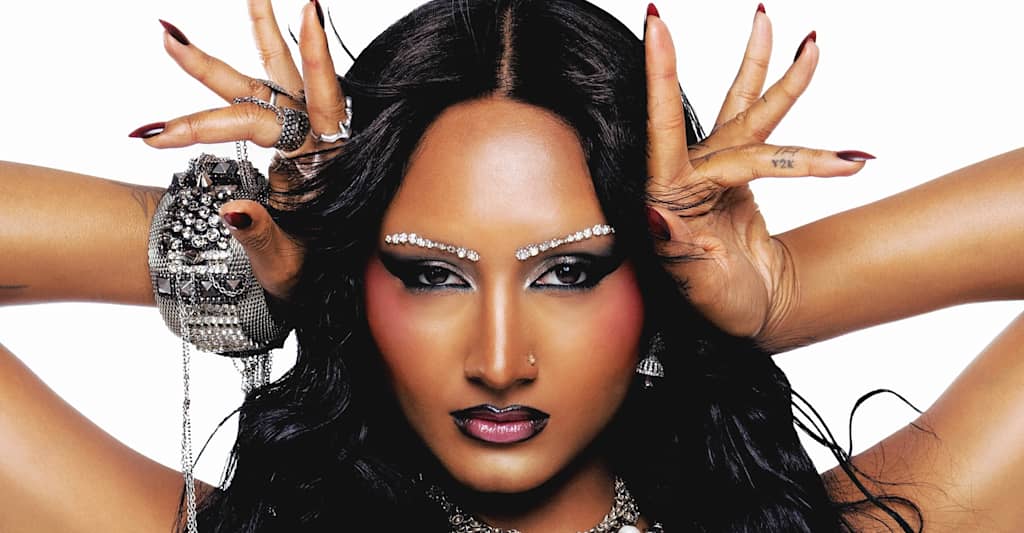
When Rhea Raj calls in from her home in Los Angeles, a week has passed since the news officially dropped that the nascent popstar inked a joint venture with HYBE America, Republic Records, and 5 Junction Management. The deal—which bears resemblance to the HYBE x Geffen contract that formed her younger sister Lara’s multinational girl group KATSEYE—has been a long time coming, she says.
“I think about the timeline of my life so much,” she adds. “Where I’m at right now feels like all the stars have aligned themselves in a way that I always hoped they would. I couldn’t have been better poised for it than I am right now.”
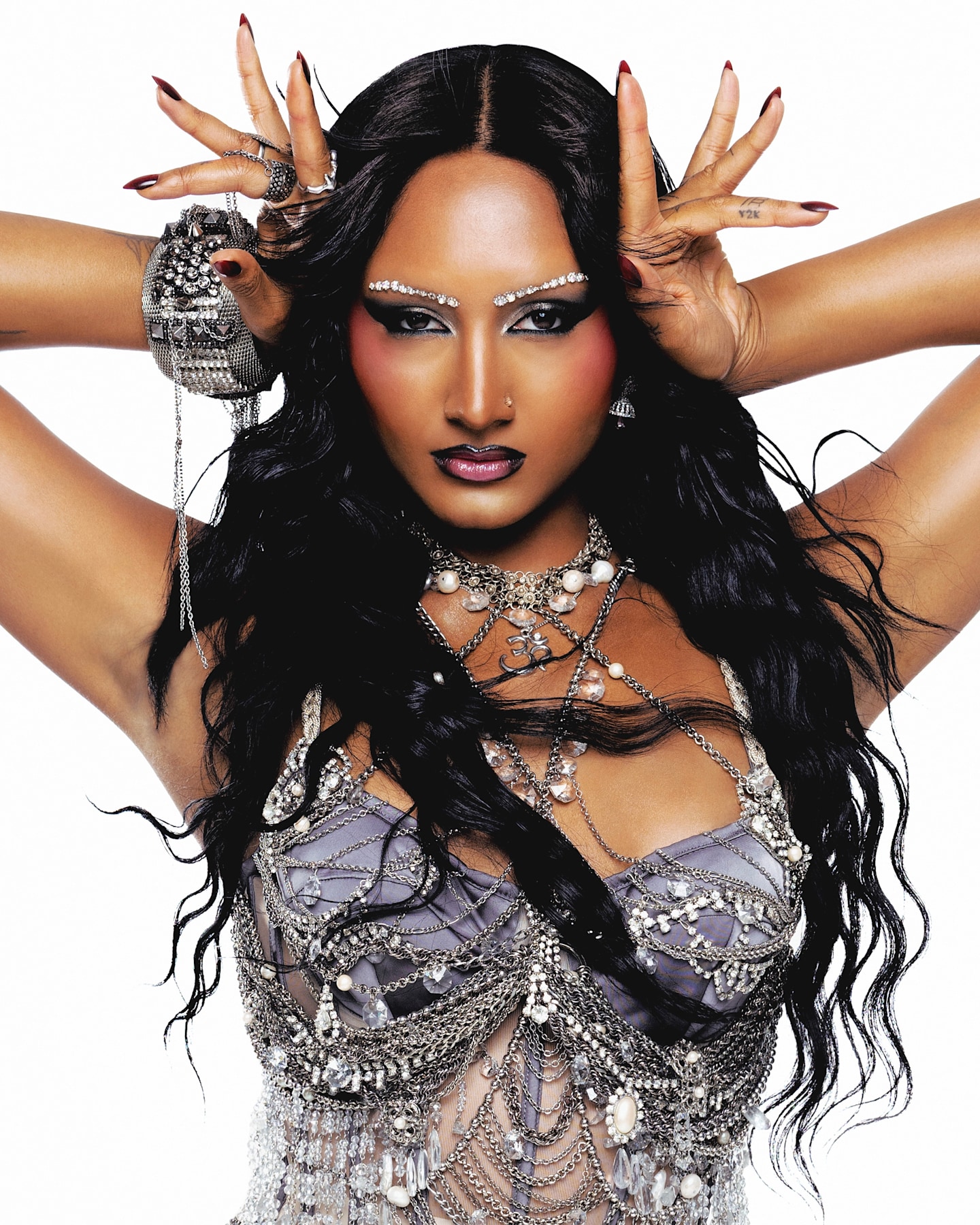 Courtesy of HYBE/Republic
Even though many have discovered Raj in the past few years, the singer has been pursuing superstardom for a decade. Her first parlay with the spotlight was as a contestant on season 15 of American Idol in 2016. In the last few years she has bubbled up on her own through two album releases and a slew of confident and slinky capital-P pop singles like 2022’s “Devil In A Dress.” But only now, she says, does she feel like she has the tools to finally be able to build the full extent of her dreams. “For the first time in my life, I’m creating music and visuals of my next project from the most genuine, innocent, childlike space I’ve ever been in before,” she says.
A New Chapter with Industry Titans
Reflecting on her journey, Raj notes that her path to this moment was paved by years of independent hustle. After moving from New York to Los Angeles five years ago, she focused on writing and producing for herself and others. A pivotal moment came when she reconnected with her manager, Anjula Acharia—the powerhouse behind Priyanka Chopra. “She’s our it-girl icon who came from India and did her thing in the U.S.,” Raj explains. With Acharia’s guidance, Raj secured meetings with Republic Records founder Monte Lipman and HYBE America’s CEO Isaac Lee, effectively assembling what she calls her “Avengers” team.
 Courtesy of HYPE/Republic
Championing South Asian Representation
For Raj, this career milestone is about more than just personal success; it is about visibility. Growing up as an Indian-American, she balanced her love for classical Indian dance with a deep appreciation for Western pop icons like Britney Spears and Rihanna. “Growing up, I didn’t see people from India or South Asian artists on big stages,” she says. “I hope that by signing with a big label, I can reach more people and versions of little Rhea. I want them to see all the things that I’ll do over the course of my life as an artist and think, ‘I can do this too.’”
It’s so crazy to me that when you see women in general, but especially a woman of color, breaking boundaries, people always want to find a way to undermine how someone got there.
Addressing the inevitable online criticism regarding her rapid rise and industry connections, Raj remains focused on her craft. She chooses to ignore the noise, preferring to let her work speak for itself. Looking ahead, she is excited about the prospect of collaborating with her sister, Lara, and continuing to turn her personal experiences—including the challenges of her early career—into art. “I’m going to use all of the fear, sadness, and pain and continue turning them into art,” she concludes. “That’s the beauty of life.”
Recent Posts
Recent Posts

HAAi Delivers a Landmark Performance in Her Latest FADER Mix

AlphaTheta Aims to Revolutionize Club Music Royalty Tracking

AlphaTheta’s Studio Plan Lets DJs Edit and Remix Their Libraries

Julia Cumming Joins Wolf Alice for Olivia Rodrigo’s ‘Unraveled’ Tour

Sasha Keable Delivers Soulful Performance on Saturday Night Live UK